Continuing Education

Publication Date:
December 2015 Vol. 10 No. 12
Author:
Carole L. White, PhD, RN
Every 40 seconds, a stroke occurs in the United
States. This translates to approximately 795,000 strokes annually; of
these, about 25% are recurrent strokes. Although stroke has declined
from the fourth to the fifth leading cause of death in this country, it
remains a major cause of adult disability and significantly changes the
lives of stroke survivors and their families. The need for better
stroke-prevention strategies is crucial. Without them, stroke prevalence
and costs are expected to rise substantially over the next two decades.
Defining stroke
While the broader definition of stroke includes both ischemic and
hemorrhagic stroke, this article focuses on ischemic stroke and
transient ischemic attack (TIA).
- Ischemic stroke is a central nervous system (CNS) infarction accompanied by signs and symptoms of stroke persisting more than 24 hours.
- TIA conventionally is defined as signs or symptoms of a
brief neurologic dysfunction that lasts less than 24 hours. However,
more widespread use of brain imaging (especially magnetic resonance
imaging) has shown that up to one-third of patients with symptoms
lasting less than 24 hours have had a CNS infarction. This has led to a
new definition of TIA as a transient neurologic dysfunction resulting
from focal brain, spinal cord, or retinal ischemia without infarction,
regardless of duration.
Primary vs. secondary stroke prevention
Primary stroke prevention refers to prevention strategies in persons with no previous history of stroke or TIA.
Secondary
prevention refers to treatment strategies in persons who’ve already had
a stroke or TIA, with the goal of preventing a recurrence.
Stroke risk factors can be modifiable or nonmodifiable. Nonmodifiable
risk factors include age, race, sex, ethnicity, and a family history of
stroke or TIA.
Modifiable factors include hypertension, hyperlipidemia, diabetes, and lifestyle factors. This article focuses on modifiable risk factors.
Risk factors for both initial and recurrent stroke are similar.
However, people who’ve had a stroke or TIA are at increased risk for a
recurrence. Annual risk for future ischemic stroke after an initial
event is approximately 3% to 4%—a significant decrease over the past two
decades. The decline stems from widespread use of evidence-based
secondary prevention practices, including antiplatelet therapy,
effective blood pressure and hyperlipidemia management, and atrial
fibrillation (AF) treatment.
Secondary stroke prevention
The most recent prevention guidelines for stroke and TIA place
greater emphasis on lifestyle, based on the growing evidence that
supports the role of lifestyle modification in vascular risk reduction.
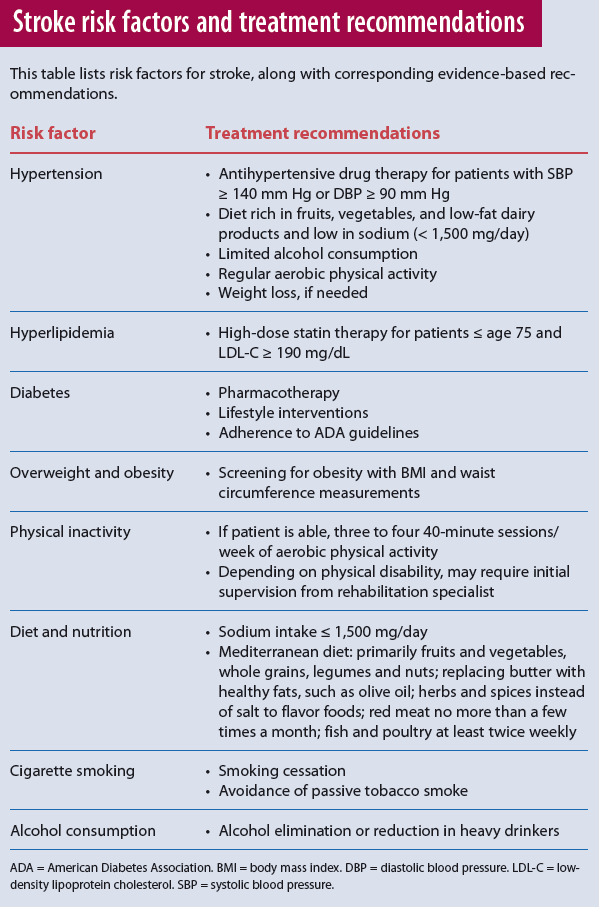
As a nurse, you can play a key role in helping stroke and TIA patients
achieve evidence-based lifestyle changes. For treatment of each risk
factor, see
Stroke risk factors and treatment recommendations.

Hypertension
Hypertension is the most significant risk factor. Approximately 70%
of people with a recent stroke have a history of hypertension. Evidence
shows that lowering blood pressure (BP) is effective in secondary stroke
prevention. A recent meta-analysis of 10 randomized trials confirmed
the benefits of lowering BP in preventing recurrent stroke. Overall,
antihypertensive drug therapy was associated with a 22% reduction in
stroke recurrence.
Experts recommend initiating therapy in adults with a history of
stroke or TIA who have a systolic BP of 140 mm Hg or higher or a
diastolic BP (DBP) of 90 mm Hg or higher. No evidence suggests a
specific antihypertensive medication or class of medications is best for
secondary stroke prevention. Instead, the goal is to reduce BP.
Besides pharmacologic treatment, several lifestyle modifications are
linked to BP reduction and should be considered as part of a
comprehensive BP management plan. They include sodium restriction;
weight loss, if needed; a Mediterranean-type diet rich in fruits,
vegetables, and low-fat dairy products; limited alcohol consumption; and
regular aerobic physical activity.
Hyperlipidemia
Epidemiologic data suggest a modest link between high low-density
lipoprotein cholesterol (LDL-C) levels and increased risk of ischemic
stroke among stroke and TIA survivors. A clinical trial that examined
LDL-C lowering for secondary stroke prevention found a 2.2% absolute
stroke reduction over the 5 years of follow-up in the group receiving
atorvastatin (a cholesterol-lowering drug) compared to placebo. (Statin
treatment carries an increased risk of hemorrhagic stroke, so statin
drugs may need to be avoided in certain stroke survivors with a history
of intracerebral hemorrhage.)
Recommendations for hyperlipidemia treatment among patients with a
history of stroke or TIA are consistent with the 2013 ACC/AHA Guideline
on the Treatment of Blood Cholesterol to Reduce Atherosclerotic
Cardiovascular Risk in Adults. High-dose statin therapy (to reduce LDL-C
by 50% or more) is recommended for patients who have had
atherosclerotic-related strokes, are age 75 or younger, and have an
LDL-C level of 190 mg/dL or higher.
Diabetes mellitus
Both prediabetes and diabetes mellitus (DM) are common in persons
who’ve had a stroke, with an estimated prevalence of 25% to 45% among
stroke and TIA survivors. DM carries a higher risk for recurrent stroke.
The Cardiovascular Health Study (CSH), funded by the National
Institutes of Health, is a large epidemiologic observational study of
cardiovascular risk factors in adults ages 65 and older living in four
U.S. communities. In a substudy of participants who’d had a stroke and
were followed for recurrence, those with DM were almost 1.6 times more
likely to have a recurrence than those without DM.
Given the high DM prevalence among stroke survivors, everyone who has
had a stroke or TIA should be screened for DM. Because no studies of
secondary stroke prevention have examined interventions for prediabetes
or DM in preventing stroke recurrence, general recommendations are based
on achieving good DM management, with lifestyle interventions and
pharmacotherapy as the mainstays.
Studies on the optimal level of glucose control among stroke patients
haven’t reported a benefit from intensive glucose lowering. Clinicians
should follow recommendations from the American Diabetes Association
(ADA) for glycemic control and cardiovascular risk-factor management.
Also, no evidence suggests one antidiabetic agent is better than another
for secondary stroke prevention; this remains an area of intensive
research. ADA recommends a patient-centered approach that considers the
desired glycated hemoglobin reduction, side-effect profiles, and cost.
Overweight and obesity
Defined as a body mass index (BMI) of 30 kg/m2 or higher, obesity is
linked to an increased risk of first stroke. Central obesity (large
waist circumference) is more strongly associated with first stroke than
general obesity.
Diagnosed in approximately one-third of persons with a recent history
of stroke or TIA, obesity is linked to increasing prevalence of
vascular risk factors. Its association with recurrent stroke is more
controversial; in fact, recent studies indicate obese patients with
stroke had a somewhat lower risk for a recurrent vascular event than
lean patients. This unexpected relationship is puzzling because weight
loss is linked to improvements in major vascular risk factors, including
dyslipidemia, DM, hypertension, and inflammation. Underestimation of
the adverse effect of obesity may stem from bias in epidemiologic
studies. Although weight loss benefits cardiovascular risk factors, its
usefulness in secondary stroke prevention is unclear.
Despite the uncertain relationship between obesity and recurrent
stroke, the most recent guidelines recommend BMI and obesity screening
for all patients who’ve had TIA or strokes.
Physical inactivity
Physical activity improves stroke risk factors and may reduce stroke
risk. No clinical trials have examined the effectiveness of exercise in
secondary stroke prevention, but the presumed benefit is based on
indirect evidence related to improved risk factors, such as BP, lipid
metabolism, insulin resistance, and weight management. Two trials
currently underway may provide information about the effectiveness of
exercise in secondary prevention.
Although the American Heart Association (AHA) recommends adults
participate in three to four 40-minute sessions per week of aerobic
physical activity, fewer than half of noninstitutionalized American
adults achieve this goal. For stroke survivors, these recommendations
may be even harder to achieve because of motor weakness, altered
perception and balance, and impaired cognition. For stroke and TIA
survivors who are capable of exercising, the above AHA recommendations
apply. Patients with post-stroke disability should be supervised by a
rehabilitation specialist at least during initiation of an exercise
program.
Diet and nutrition
Several components of diet and nutrition can lead to increased BP and
consequently an increased stroke risk. They include increased sodium
intake, excess weight, and excess alcohol consumption. DASH-type diets
(Dietary Approaches to Stop Hypertension), high in consumption of fruits
and vegetables and low-fat dairy products, and reduced intake of sodium
and saturated fats can help reduce BP and thus may lower stroke risk.
More recently, several studies have examined the Mediterranean diet
and its link to reduced stroke risk. This diet emphasizes fruits,
vegetables, whole grains, low-fat dairy products, poultry, fish, olive
oil, and nuts while limiting sweets and red meat. A recent study found
it had a significant effect on primary stroke prevention compared to a
low-fat diet. Recommendations include the Mediterranean diet and
counseling for stroke and TIA patients to reduce sodium intake to less
than approximately 2.4 g/day, with an additional reduction to less than
1.5 g/day associated with an even greater BP reduction.
Cigarette smoking
Extensive data confirm a link between cigarette smoking and first
ischemic stroke, although evidence in secondary stroke prevention is
less well-established. In the CHS, elderly smokers were twice as likely
as nonsmokers to have a recurrent stroke. No clinical trials have
investigated smoking cessation for secondary stroke or TIA prevention.
Given the overwhelming evidence on the harmful effects of smoking, such
trials are unlikely to be done. All patients with stroke or TIA who are
current smokers should be strongly advised to quit smoking and avoid
passive tobacco smoke. Counseling, nicotine products, and oral
smoking-cessation medications are recommended to support smoking
cessation.
Alcohol consumption
Few studies have directly evaluated the link between alcohol
consumption and recurrent stroke. With ischemic stroke, the association
with alcohol appears to be J-shaped, meaning that light to moderate
consumption is protective whereas heavier alcohol use carries an
elevated risk. The protective effect may relate to the effects of
alcohol on high-density lipoprotein cholesterol (HDL-C), whereas the
elevated risk with heavier alcohol use may come from its effect on BP
and glucose, as well as atrial fibrillation.
Because alcohol consumption can lead to dependence and alcoholism is a
significant public health problem, an important goal for secondary
stroke prevention is to eliminate or reduce alcohol consumption in heavy
drinkers. Light to moderate consumption (up to two drinks daily for men
and up to one drink daily for women) may be reasonable, although
nondrinkers shouldn’t be counseled to start drinking.
Antiplatelet and anticoagulant agents for secondary stroke prevention
The mainstay of secondary stroke prevention is either antiplatelet or
anticoagulant therapy, depending on the stroke mechanism. For people
who’ve had strokes or TIAs of a noncardioembolic origin, the Food and
Drug Administration has approved four antiplatelet drugs for prevention
of vascular events—aspirin, combination aspirin/dipyridamole,
clopidogrel, and ticlopidine. Each agent carries an approximately 22%
relative risk reduction for recurrent stroke, myocardial infarction, or
death.
The drugs have important differences with direct implications for
selecting a specific agent. Aspirin alone or in combination with
dipyridamole is recommended as initial therapy for preventing a
recurrence. Clopidogrel is recommended as a reasonable replacement for
aspirin or aspirin/dipyridamole, as well as for patients with
aspirin allergies. The aspirin/
clopidogrel combination isn’t recommended for routine long-term
secondary prevention because of an increased hemorrhage risk.
Ticlopidine rarely is used in clinical practice because of its side
effect-profile and availability of newer agents.
Atrial fibrillation
AF is an important risk factor for stroke and may cause 10% to 12% of
all strokes each year. Several validated risk assessment tools classify
stroke risk among patients with AF, taking into account such factors as
comorbid heart failure, hypertension, DM, and age. Research shows an
increasing stroke risk with higher scores on the classification system
(more comorbidities along with AF). The evidence is strong and
consistent for using warfarin in preventing stroke among AF patients,
for both primary and secondary prevention. The optimal warfarin dose for
stroke prevention among these patients is one that produces an
international normalized ratio (INR) of 2.0 to 3.0. Maintaining a
therapeutic level is a challenge, though. A high percentage of AF
patients have subtherapeutic levels and therefore inadequate stroke
protection.
Newer agents, such as apixaban, dabigatran, and rivaroxaban, also can
be used for secondary stroke prevention in patients with nonvalvular
AF. For patients unable to take oral anticoagulants, aspirin alone is
recommended. Clinicians should base selection of an agent on the
patient’s risk factors and preference, drug interactions, and other
clinical characteristics.
Life’s Simple 7®
Despite our knowledge of stroke risk factors and strong evidence on
treatment strategies to control risk, we’ve been largely unsuccessful in
supporting good risk-factor control after stroke. Research continues to
show suboptimal control of vascular risk factors in patients who’ve had
strokes. The American Heart and Stroke Association’s 2020 goal is to
improve Americans’ cardiovascular health by 20%. Toward this goal, these
organizations have defined seven modifiable health metrics (BP,
cholesterol, glucose, exercise, smoking, diet, and BMI) that increase
the chance of living free of cardiovascular disease and stroke; these
are called Life’s Simple 7. Although designed for primary prevention,
Life’s Simple 7 metrics also apply to secondary stroke prevention.
In a recent study examining Life’s Simple 7 among stroke survivors,
investigators reported that fewer than one in every 100 stroke survivors
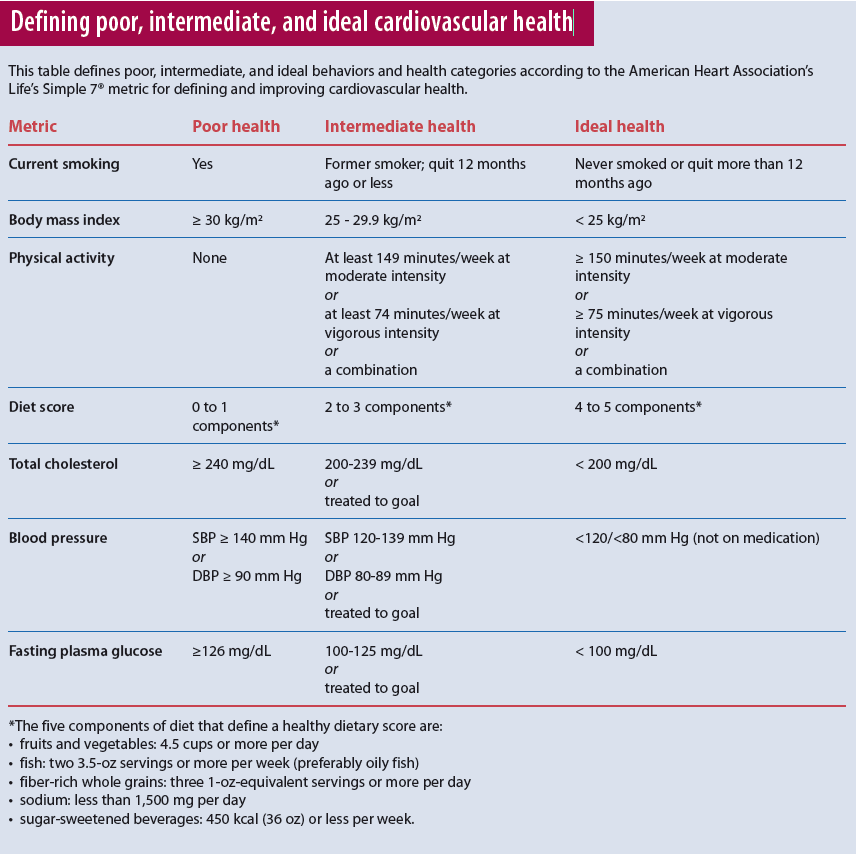
met all AHA criteria for ideal cardiovascular health. (See
Defining poor, intermediate, and ideal cardiovascular health.)

Implications for nurses
Clinicians need to develop effective interventions that engage stroke
survivors and their families in achieving excellent risk factor control
and subsequently reducing stroke burden. For nurses, a key challenge in
secondary stroke prevention is providing education and supporting
adherence to secondary-prevention medications and lifestyle changes.
Nursing has played a significant role in quality improvement programs,
such as the American Heart and Stroke Association’s “Get With the
Guidelines–Stroke” program to improve initiation of secondary prevention
measures in acute-care settings.
As nurses, we have a responsibility to ensure secondary
stroke-prevention practices across the continuum of care. Research shows
that medication adherence diminishes over time, with more than
one-third of patients stopping medications in the 2 years after stroke.
Not only must we provide information about secondary-prevention drugs
patients will take after discharge (including antiplatelets or
anticoagulants, antihypertensives, and statins); but we also must assess
for potential barriers to adherence. Poststroke disabilities, such as
swallowing difficulties, motor weakness, and cognitive impairment, may
interfere with medication management. Involving family members
(especially the primary family caregiver) in discussions about
medications is crucial. Also, be sure to assess the patient’s financial
and insurance-related issues. If inadequate finances are a potential
barrier to medication adherence, consult with a social worker to assist
the patient.
Begin education early in the patient’s hospital stay and reinforce
your teaching on a regular basis. Be sure to provide written materials,
as stroke survivors and their families report difficulty recalling
information given during the hospital stay. Post-discharge follow-up
programs (by telephone or in person) to identify concerns about
medications and to ensure all prescriptions have been filled can boost
adherence.
Health promotion
Although health promotion is an important domain of nursing care,
some nurses devote little patient-encounter time to it. The significance
of lifestyle in secondary prevention and the low rate of control among
stroke survivors highlights the need for action in this area.
We need to use approaches that support patients in risk-factor
self-management in their own environment. Lifestyle changes, such as
increasing physical activity, need to be tailored to each individual,
with consideration of stroke-related deficits. Interventions with stroke
survivors to increase awareness of risk and manage risk factors over
the long term, such as education, written materials, behavior
modification, and stroke nurse specialist follow-up, have shown modest
effects. Empowering patients to succeed in goal-setting around healthy
lifestyle choices has proven to be an effective strategy.
Post-Stroke Checklist
The Post-Stroke Checklist was developed in 2013 by an international
team of stroke experts to help ensure stroke survivors’ long-term needs
are identified and managed appropriately. The tool addresses 11 areas,
including secondary stroke prevention, mood, communication,
relationships, and incontinence. These often-overlooked needs have a
tremendous impact on quality of life and long-term outcomes after
stroke. The easy-to-use checklist can be incorporated into regular
follow-up care after stroke; visit http://goo.gl/0RZKT4 to see the
checklist.
Health information technologies
Health information technologies may hold promise for supporting
self-management practices around risk- factor control—both in real time
and over the long term. A Netherlands study reported modest support for
improved risk-factor control through a website personalized to
individual risk, identified during a baseline visit with a nurse
practitioner. Patients were instructed to use the website frequently and
to log in at least every other week to submit new risk-factor
measurements, BP, or smoking status, as well as to read and send
messages. The sample included both patients at risk for a first stroke
and those at risk for a recurrent stroke. After 12 months of
participation, patients in the Internet-based, nurse-led vascular
prevention group showed a 14% reduction in Framingham heart risk score
compared to patients in the usual care group.
Evidence is building for the effectiveness of mobile health (mHealth)
tools in supporting lifestyle changes. Numerous health apps can be
recommended to stroke survivors to identify their risk factors and
provide a risk score, including the American Heart Association’s My Life
Check, which provides a score related to Life’s Simple 7. A recent
study examined use of an mHealth app at the bedside; nursing students
used a secondary prevention app to provide patients with information
about risk factors at the bedside. Evidence-based practice has been
cited as a core competency for nurses; now it’s possible to have this
evidence at the bedside so nurses can more easily translate it into
practice, thereby improving secondary stroke prevention and promoting
better patient outcomes.
The global trend of increasing stroke incidence underscores the
importance of working with patients who’ve had strokes or TIA to reduce
their recurrence risk. Nurses play an essential role in screening for
risk factors, increasing awareness of risk, and supporting stroke or TIA
survivors in reducing risk, particularly when it comes to adhering to
medications and lifestyle changes. The complexity of behavior change
required suggests multifaceted and tailored strategies most likely are
needed to support and sustain change.
Carole L. White is an associate professor in the School of
Nursing at the University of Texas Health Sciences Center at San
Antonio.
Selected references
American Heart Association. My Life Check – Life’s Simple 7.
heart.org/HEARTORG/
Conditions/My-Life-Check—Lifes-Simple-7_UCM_471453_Article.jsp
Brenner DA, Zweifler RM, Gomez CR, et al. Awareness, treatment, and control of vascular risk factors among stroke survivors.
J Stroke Cerebrovasc Dis. 2010;19(4):311-20.
Bushnell CD, Olson DM, Zhao X, et al. Secondary preventive medication persistence and adherence 1 year after stroke.
Neurology. 2011;77(12):1182-90.
Crossman T, Rider T. Novel oral anticoagulants.
InnovAiT. 2013;6(8):535-7.
FitzGerald LZ, Rorie A, Salem BE. Improving secondary prevention
screening in clinical encounters using mHealth among prelicensure
master’s entry clinical nursing students.
Worldviews Evid Based Nurs. 2015;12(2):79-87.
Kaplan RC, Tirschwell DL, Longstreth WT, et al. Vascular events,
mortality, and preventive therapy following ischemic stroke in the
elderly.
Neurology. 2005;65:835-42.
Kernan WN, Ovbiagele B, Black HR, et al; American Heart Association
Stroke Council, Council on Cardiovascular and Stroke Nursing, Council on
Clinical Cardiology, and Council on Peripheral Vascular Disease.
Guidelines for the prevention of stroke in patients with stroke and
transient ischemic attack: a guideline for healthcare professionals from
the American Heart Association/
American Stroke Association.
Stroke. 2014;45(7):2160-236.
Lloyd-Jones DM, Hong Y, Labarth D, et al; American Heart Association
Strategic Planning Task Forces and Statistics Committee. Defining and
setting national goals for cardiovascular health promotion and disease
reduction: the American Heart Association’s strategic Impact Goal
through 2020 and beyond.
Circulation. 2010;121(4):586-613.
Mozaffarian D, Benjamin EJ, Go AS, et al; American Heart Association
Statistics Committee and Stroke Statistics Subcommittee. Heart disease
and stroke statistics—2015 update: a report from the American Heart
Association.
Circulation. 2015;131(4):e29-e322.
Philp I, Brainin M, Walker MF, et al. Development of a poststroke checklist to standardize follow-up care for stroke survivors
. J Stroke Cerebrovasc Dis. 2013;22(7):e173-e180.
Vernooij JW, Kaasjager HA, van der Graaf Y, et al; SMARTStudy Group.
Internet based vascular risk factor management for patients with
clinically manifest vascular disease: randomised controlled trial.
BMJ. 2012;344: e3750.
Wei J, Hollin I, Kachnowski S. A review of the use of mobile phone
text messaging in clinical and healthy behaviour interventions.
J Telemed Telecare. 2011;17(1):41-8.