Showing posts with label #nurses. Show all posts

Monday, March 28, 2016

Secondary prevention of stroke

Continuing Education

Secondary stroke

Secondary prevention of stroke

Publication Date: December 2015 Vol. 10 No. 12
Author: Carole L. White, PhD, RN


Every 40 seconds, a stroke occurs in the United States. This translates to approximately 795,000 strokes annually; of these, about 25% are recurrent strokes. Although stroke has declined from the fourth to the fifth leading cause of death in this country, it remains a major cause of adult disability and significantly changes the lives of stroke survivors and their families. The need for better stroke-prevention strategies is crucial. Without them, stroke prevalence and costs are expected to rise substantially over the next two decades.

Defining stroke

While the broader definition of stroke includes both ischemic and hemorrhagic stroke, this article focuses on ischemic stroke and transient ischemic attack (TIA).
  • Ischemic stroke is a central nervous system (CNS) infarction accompanied by signs and symptoms of stroke persisting more than 24 hours.
  • TIA conventionally is defined as signs or symptoms of a brief neurologic dysfunction that lasts less than 24 hours. However, more widespread use of brain imaging (especially magnetic resonance imaging) has shown that up to one-third of patients with symptoms lasting less than 24 hours have had a CNS infarction. This has led to a new definition of TIA as a transient neurologic dysfunction resulting from focal brain, spinal cord, or retinal ischemia without infarction, regardless of duration.

Primary vs. secondary stroke prevention

Primary stroke prevention refers to prevention strategies in persons with no previous history of stroke or TIA. Secondary prevention refers to treatment strategies in persons who’ve already had a stroke or TIA, with the goal of preventing a recurrence.
Stroke risk factors can be modifiable or nonmodifiable. Nonmodifiable risk factors include age, race, sex, ethnicity, and a family history of stroke or TIA. Modifiable factors include hypertension, hyperlipidemia, diabetes, and lifestyle factors. This article focuses on modifiable risk factors.
Risk factors for both initial and recurrent stroke are similar. However, people who’ve had a stroke or TIA are at increased risk for a recurrence. Annual risk for future ischemic stroke after an initial event is approximately 3% to 4%—a significant decrease over the past two decades. The decline stems from widespread use of evidence-based secondary prevention practices, including antiplatelet therapy, effective blood pressure and hyperlipidemia management, and atrial fibrillation (AF) treatment.

Secondary stroke prevention

The most recent prevention guidelines for stroke and TIA place greater emphasis on lifestyle, based on the growing evidence that supports the role of lifestyle modification in vascular risk reduction. As a nurse, you can play a key role in helping stroke and TIA patients achieve evidence-based lifestyle changes. For treatment of each risk factor, see Stroke risk factors and treatment recommendations.
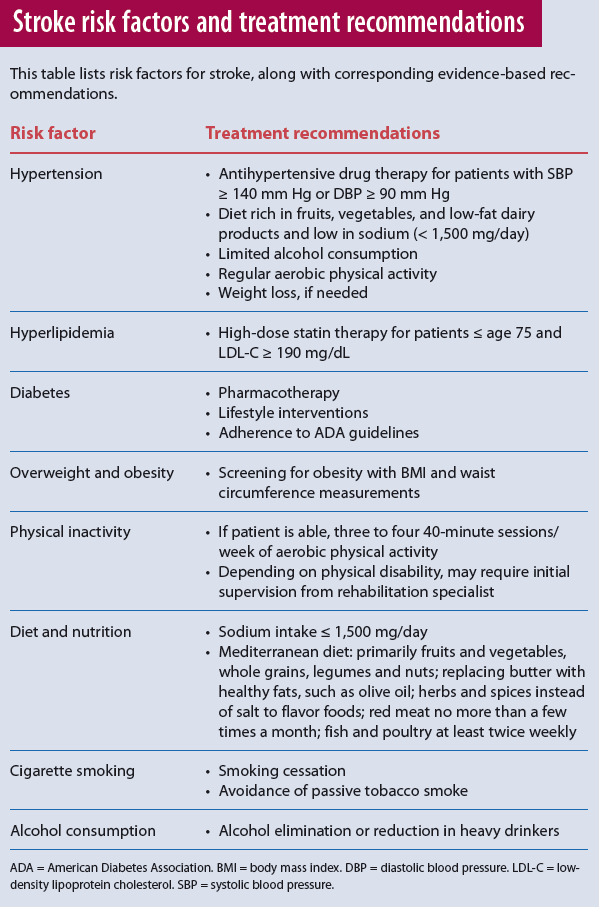
Stroke risk

Hypertension

Hypertension is the most significant risk factor. Approximately 70% of people with a recent stroke have a history of hypertension. Evidence shows that lowering blood pressure (BP) is effective in secondary stroke prevention. A recent meta-analysis of 10 randomized trials confirmed the benefits of lowering BP in preventing recurrent stroke. Overall, antihypertensive drug therapy was associated with a 22% reduction in stroke recurrence.
Experts recommend initiating therapy in adults with a history of stroke or TIA who have a systolic BP of 140 mm Hg or higher or a diastolic BP (DBP) of 90 mm Hg or higher. No evidence suggests a specific antihypertensive medication or class of medications is best for secondary stroke prevention. Instead, the goal is to reduce BP.
Besides pharmacologic treatment, several lifestyle modifications are linked to BP reduction and should be considered as part of a comprehensive BP management plan. They include sodium restriction; weight loss, if needed; a Mediterranean-type diet rich in fruits, vegetables, and low-fat dairy products; limited alcohol consumption; and regular aerobic physical activity.

Hyperlipidemia

Epidemiologic data suggest a modest link between high low-density lipoprotein cholesterol (LDL-C) levels and increased risk of ischemic stroke among stroke and TIA survivors. A clinical trial that examined LDL-C lowering for secondary stroke prevention found a 2.2% absolute stroke reduction over the 5 years of follow-up in the group receiving atorvastatin (a cholesterol-lowering drug) compared to placebo. (Statin treatment carries an increased risk of hemorrhagic stroke, so statin drugs may need to be avoided in certain stroke survivors with a history of intracerebral hemorrhage.)
Recommendations for hyperlipidemia treatment among patients with a history of stroke or TIA are consistent with the 2013 ACC/AHA Guideline on the Treatment of Blood Cholesterol to Reduce Atherosclerotic Cardiovascular Risk in Adults. High-dose statin therapy (to reduce LDL-C by 50% or more) is recommended for patients who have had atherosclerotic-related strokes, are age 75 or younger, and have an LDL-C level of 190 mg/dL or higher.

Diabetes mellitus

Both prediabetes and diabetes mellitus (DM) are common in persons who’ve had a stroke, with an estimated prevalence of 25% to 45% among stroke and TIA survivors. DM carries a higher risk for recurrent stroke. The Cardiovascular Health Study (CSH), funded by the National Institutes of Health, is a large epidemiologic observational study of cardiovascular risk factors in adults ages 65 and older living in four U.S. communities. In a substudy of participants who’d had a stroke and were followed for recurrence, those with DM were almost 1.6 times more likely to have a recurrence than those without DM.
Given the high DM prevalence among stroke survivors, everyone who has had a stroke or TIA should be screened for DM. Because no studies of secondary stroke prevention have examined interventions for prediabetes or DM in preventing stroke recurrence, general recommendations are based on achieving good DM management, with lifestyle interventions and pharmacotherapy as the mainstays.
Studies on the optimal level of glucose control among stroke patients haven’t reported a benefit from intensive glucose lowering. Clinicians should follow recommendations from the American Diabetes Association (ADA) for glycemic control and cardiovascular risk-factor management. Also, no evidence suggests one antidiabetic agent is better than another for secondary stroke prevention; this remains an area of intensive research. ADA recommends a patient-centered approach that considers the desired glycated hemoglobin reduction, side-effect profiles, and cost.

Overweight and obesity

Defined as a body mass index (BMI) of 30 kg/m2 or higher, obesity is linked to an increased risk of first stroke. Central obesity (large waist circumference) is more strongly associated with first stroke than general obesity.
Diagnosed in approximately one-third of persons with a recent history of stroke or TIA, obesity is linked to increasing prevalence of vascular risk factors. Its association with recurrent stroke is more controversial; in fact, recent studies indicate obese patients with stroke had a somewhat lower risk for a recurrent vascular event than lean patients. This unexpected relationship is puzzling because weight loss is linked to improvements in major vascular risk factors, including dyslipidemia, DM, hypertension, and inflammation. Underestimation of the adverse effect of obesity may stem from bias in epidemiologic studies. Although weight loss benefits cardiovascular risk factors, its usefulness in secondary stroke prevention is unclear.
Despite the uncertain relationship between obesity and recurrent stroke, the most recent guidelines recommend BMI and obesity screening for all patients who’ve had TIA or strokes.

Physical inactivity

Physical activity improves stroke risk factors and may reduce stroke risk. No clinical trials have examined the effectiveness of exercise in secondary stroke prevention, but the presumed benefit is based on indirect evidence related to improved risk factors, such as BP, lipid metabolism, insulin resistance, and weight management. Two trials currently underway may provide information about the effectiveness of exercise in secondary prevention.
Although the American Heart Association (AHA) recommends adults participate in three to four 40-minute sessions per week of aerobic physical activity, fewer than half of noninstitutionalized American adults achieve this goal. For stroke survivors, these recommendations may be even harder to achieve because of motor weakness, altered perception and balance, and impaired cognition. For stroke and TIA survivors who are capable of exercising, the above AHA recommendations apply. Patients with post-stroke disability should be supervised by a rehabilitation specialist at least during initiation of an exercise program.

Diet and nutrition

Several components of diet and nutrition can lead to increased BP and consequently an increased stroke risk. They include increased sodium intake, excess weight, and excess alcohol consumption. DASH-type diets (Dietary Approaches to Stop Hypertension), high in consumption of fruits and vegetables and low-fat dairy products, and reduced intake of sodium and saturated fats can help reduce BP and thus may lower stroke risk.
More recently, several studies have examined the Mediterranean diet and its link to reduced stroke risk. This diet emphasizes fruits, vegetables, whole grains, low-fat dairy products, poultry, fish, olive oil, and nuts while limiting sweets and red meat. A recent study found it had a significant effect on primary stroke prevention compared to a low-fat diet. Recommendations include the Mediterranean diet and counseling for stroke and TIA patients to reduce sodium intake to less than approximately 2.4 g/day, with an additional reduction to less than 1.5 g/day associated with an even greater BP reduction.

Cigarette smoking

Extensive data confirm a link between cigarette smoking and first ischemic stroke, although evidence in secondary stroke prevention is less well-established. In the CHS, elderly smokers were twice as likely as nonsmokers to have a recurrent stroke. No clinical trials have investigated smoking cessation for secondary stroke or TIA prevention. Given the overwhelming evidence on the harmful effects of smoking, such trials are unlikely to be done. All patients with stroke or TIA who are current smokers should be strongly advised to quit smoking and avoid passive tobacco smoke. Counseling, nicotine products, and oral smoking-cessation medications are recommended to support smoking cessation.

Alcohol consumption

Few studies have directly evaluated the link between alcohol consumption and recurrent stroke. With ischemic stroke, the association with alcohol appears to be J-shaped, meaning that light to moderate consumption is protective whereas heavier alcohol use carries an elevated risk. The protective effect may relate to the effects of alcohol on high-density lipoprotein cholesterol (HDL-C), whereas the elevated risk with heavier alcohol use may come from its effect on BP and glucose, as well as atrial fibrillation.
Because alcohol consumption can lead to dependence and alcoholism is a significant public health problem, an important goal for secondary stroke prevention is to eliminate or reduce alcohol consumption in heavy drinkers. Light to moderate consumption (up to two drinks daily for men and up to one drink daily for women) may be reasonable, although nondrinkers shouldn’t be counseled to start drinking.

Antiplatelet and anticoagulant agents for secondary stroke prevention

The mainstay of secondary stroke prevention is either antiplatelet or anticoagulant therapy, depending on the stroke mechanism. For people who’ve had strokes or TIAs of a noncardioembolic origin, the Food and Drug Administration has approved four antiplatelet drugs for prevention of vascular events—aspirin, combination aspirin/dipyridamole, clopidogrel, and ticlopidine. Each agent carries an approximately 22% relative risk reduction for recurrent stroke, myocardial infarction, or death.
The drugs have important differences with direct implications for selecting a specific agent. Aspirin alone or in combination with dipyridamole is recommended as initial therapy for preventing a recurrence. Clopidogrel is recommended as a reasonable replacement for aspirin or aspirin/di­py­rid­a­mole, as well as for patients with aspirin allergies. The aspirin/
clopidogrel combination isn’t recommended for routine long-term secondary prevention because of an increased hemorrhage risk. Ticlopidine rarely is used in clinical practice because of its side effect-profile and availability of newer agents.

Atrial fibrillation

AF is an important risk factor for stroke and may cause 10% to 12% of all strokes each year. Several validated risk assessment tools classify stroke risk among patients with AF, taking into account such factors as comorbid heart failure, hypertension, DM, and age. Research shows an increasing stroke risk with higher scores on the classification system (more comorbidities along with AF). The evidence is strong and consistent for using warfarin in preventing stroke among AF patients, for both primary and secondary prevention. The optimal warfarin dose for stroke prevention among these patients is one that produces an international normalized ratio (INR) of 2.0 to 3.0. Maintaining a therapeutic level is a challenge, though. A high percentage of AF patients have subtherapeutic levels and therefore inadequate stroke protection.
Newer agents, such as apixaban, dabigatran, and rivaroxaban, also can be used for secondary stroke prevention in patients with nonvalvular AF. For patients unable to take oral anticoagulants, aspirin alone is recommended. Clinicians should base selection of an agent on the patient’s risk factors and preference, drug interactions, and other clinical characteristics.

Life’s Simple 7®

Despite our knowledge of stroke risk factors and strong evidence on treatment strategies to control risk, we’ve been largely unsuccessful in supporting good risk-factor control after stroke. Research continues to show suboptimal control of vascular risk factors in patients who’ve had strokes. The American Heart and Stroke Association’s 2020 goal is to improve Americans’ cardiovascular health by 20%. Toward this goal, these organizations have defined seven modifiable health metrics (BP, cholesterol, glucose, exercise, smoking, diet, and BMI) that increase the chance of living free of cardiovascular disease and stroke; these are called Life’s Simple 7. Although designed for primary prevention, Life’s Simple 7 metrics also apply to secondary stroke prevention.
In a recent study examining Life’s Simple 7 among stroke survivors, investigators reported that fewer than one in every 100 stroke survivors met all AHA criteria for ideal cardiovascular health. (See Defining poor, intermediate, and ideal cardiovascular health.)
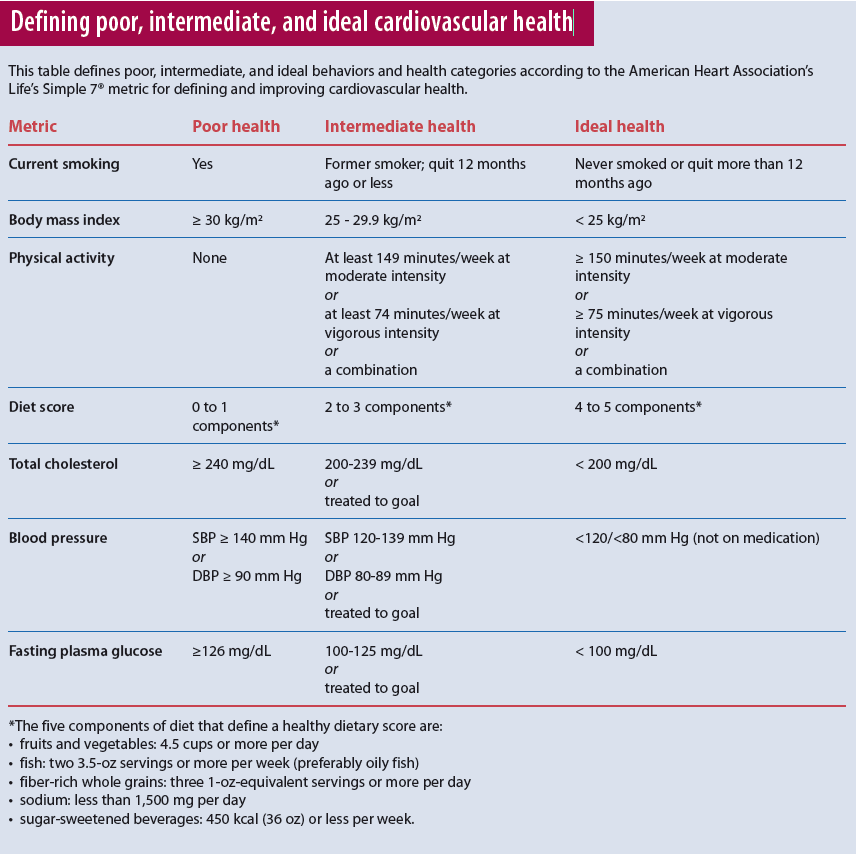
Defining poor, intermediate, and ideal cardiovascular health

Implications for nurses

Clinicians need to develop effective interventions that engage stroke survivors and their families in achieving excellent risk factor control and subsequently reducing stroke burden. For nurses, a key challenge in secondary stroke prevention is providing education and supporting adherence to secondary-prevention medications and lifestyle changes. Nursing has played a significant role in quality improvement programs, such as the American Heart and Stroke Association’s “Get With the Guidelines–Stroke” program to improve initiation of secondary prevention measures in acute-care settings.
As nurses, we have a responsibility to ensure secondary stroke-prevention practices across the continuum of care. Research shows that medication adherence diminishes over time, with more than one-third of patients stopping medications in the 2 years after stroke. Not only must we provide information about secondary-prevention drugs patients will take after discharge (including antiplatelets or anticoagulants, antihypertensives, and statins); but we also must assess for potential barriers to adherence. Poststroke disabilities, such as swallowing difficulties, motor weakness, and cognitive impairment, may interfere with medication management. Involving family members (especially the primary family caregiver) in discussions about medications is crucial. Also, be sure to assess the patient’s financial and insurance-related issues. If inadequate finances are a potential barrier to medication adherence, consult with a social worker to assist the patient.
Begin education early in the patient’s hospital stay and reinforce your teaching on a regular basis. Be sure to provide written materials, as stroke survivors and their families report difficulty recalling information given during the hospital stay. Post-discharge follow-up programs (by telephone or in person) to identify concerns about medications and to ensure all prescriptions have been filled can boost adherence.

Health promotion

Although health promotion is an important domain of nursing care, some nurses devote little patient-encounter time to it. The significance of lifestyle in secondary prevention and the low rate of control among stroke survivors highlights the need for action in this area.
We need to use approaches that support patients in risk-factor self-management in their own environment. Lifestyle changes, such as increasing physical activity, need to be tailored to each individual, with consideration of stroke-related deficits. Interventions with stroke survivors to increase awareness of risk and manage risk factors over the long term, such as education, written materials, behavior modification, and stroke nurse specialist follow-up, have shown modest effects. Empowering patients to succeed in goal-setting around healthy lifestyle choices has proven to be an effective strategy.

Post-Stroke Checklist

The Post-Stroke Checklist was developed in 2013 by an international team of stroke experts to help ensure stroke survivors’ long-term needs are identified and managed appropriately. The tool addresses 11 areas, including secondary stroke prevention, mood, communication, relationships, and incontinence. These often-overlooked needs have a tremendous impact on quality of life and long-term outcomes after stroke. The easy-to-use checklist can be incorporated into regular follow-up care after stroke; visit http://goo.gl/0RZKT4 to see the checklist.

Health information technologies

Health information technologies may hold promise for supporting self-management practices around risk- factor control—both in real time and over the long term. A Netherlands study reported modest support for improved risk-factor control through a website personalized to individual risk, identified during a baseline visit with a nurse practitioner. Patients were instructed to use the website frequently and to log in at least every other week to submit new risk-factor measurements, BP, or smoking status, as well as to read and send messages. The sample included both patients at risk for a first stroke and those at risk for a recurrent stroke. After 12 months of participation, patients in the Internet-based, nurse-led vascular prevention group showed a 14% reduction in Framingham heart risk score compared to patients in the usual care group.
Evidence is building for the effectiveness of mobile health (mHealth) tools in supporting lifestyle changes. Numerous health apps can be recommended to stroke survivors to identify their risk factors and provide a risk score, including the American Heart Association’s My Life Check, which provides a score related to Life’s Simple 7. A recent study examined use of an mHealth app at the bedside; nursing students used a secondary prevention app to provide patients with information about risk factors at the bedside. Evidence-based practice has been cited as a core competency for nurses; now it’s possible to have this evidence at the bedside so nurses can more easily translate it into practice, thereby improving secondary stroke prevention and promoting better patient outcomes.
The global trend of increasing stroke incidence underscores the importance of working with patients who’ve had strokes or TIA to reduce their recurrence risk. Nurses play an essential role in screening for risk factors, increasing awareness of risk, and supporting stroke or TIA survivors in reducing risk, particularly when it comes to adhering to medications and lifestyle changes. The complexity of behavior change required suggests multifaceted and tailored strategies most likely are needed to support and sustain change.

Carole L. White is an associate professor in the School of Nursing at the University of Texas Health Sciences Center at San Antonio.

Selected references
American Heart Association. My Life Check – Life’s Simple 7. heart.org/HEARTORG/
Conditions/My-Life-Check—Lifes-Simple-7_UCM_471453_Article.jsp
Brenner DA, Zweifler RM, Gomez CR, et al. Awareness, treatment, and control of vascular risk factors among stroke survivors. J Stroke Cerebrovasc Dis. 2010;19(4):311-20.
Bushnell CD, Olson DM, Zhao X, et al. Secondary preventive medication persistence and adherence 1 year after stroke. Neurology. 2011;77(12):1182-90.
Crossman T, Rider T. Novel oral anticoagulants. InnovAiT. 2013;6(8):535-7.
FitzGerald LZ, Rorie A, Salem BE. Improving secondary prevention screening in clinical encounters using mHealth among prelicensure master’s entry clinical nursing students. Worldviews Evid Based Nurs. 2015;12(2):79-87.
Kaplan RC, Tirschwell DL, Longstreth WT, et al. Vascular events, mortality, and preventive therapy following ischemic stroke in the elderly. Neurology. 2005;65:835-42.
Kernan WN, Ovbiagele B, Black HR, et al; American Heart Association Stroke Council, Council on Cardiovascular and Stroke Nursing, Council on Clinical Cardiology, and Council on Peripheral Vascular Disease. Guidelines for the prevention of stroke in patients with stroke and transient ischemic attack: a guideline for healthcare professionals from the American Heart Association/
American Stroke Association. Stroke. 2014;45(7):2160-236.
Lloyd-Jones DM, Hong Y, Labarth D, et al; American Heart Association Strategic Planning Task Forces and Statistics Committee. Defining and setting national goals for cardiovascular health promotion and disease reduction: the American Heart Association’s strategic Impact Goal through 2020 and beyond. Circulation. 2010;121(4):586-613.
Mozaffarian D, Benjamin EJ, Go AS, et al; American Heart Association Statistics Committee and Stroke Statistics Subcommittee. Heart disease and stroke statistics—2015 update: a report from the American Heart Association. Circulation. 2015;131(4):e29-e322.
Philp I, Brainin M, Walker MF, et al. Development of a poststroke checklist to standardize follow-up care for stroke survivors. J Stroke Cerebrovasc Dis. 2013;22(7):e173-e180.
Vernooij JW, Kaasjager HA, van der Graaf Y, et al; SMARTStudy Group. Internet based vascular risk factor management for patients with clinically manifest vascular disease: randomised controlled trial. BMJ. 2012;344: e3750.
Wei J, Hollin I, Kachnowski S. A review of the use of mobile phone text messaging in clinical and healthy behaviour interventions. J Telemed Telecare. 2011;17(1):41-8.

Monday, March 21, 2016

Preceptor education: Focusing on quality and safety education for nurses

preceptors

Preceptor education: Focusing on quality and safety education for nurses

Publication Date: Jan 2016 Vol. 11 No. 1
Author: Fidelindo Lim, DNP, CCRN; Kimberly A. Weiss, MSN, FNP-BC; and Ingrid Herrera-Capoziello, MSN, RN, ANP NURSING

The transition from novice to expert nurse has been an important topic in nursing circles for more than 30 years, since Patricia Benner adapted the Dreyfus model of skills acquisition to the nursing profession. The model still serves as an excellent conceptual framework for the professional development of new nurses. Combined with core competencies from the Quality & Safety Education for Nurses (QSEN) initiative as the foundation for preceptor education, the model provides a road map for assessing and evaluating skills acquisition of new nurses or new preceptors. QSEN competencies include patient-centered care, teamwork and collaboration, evidence-based practice, quality improvement, safety, and informatics.
The impetus to anchor preceptor education to a solid framework rests on evidence that prelicensure nursing education, although sufficient for fostering formation of professional identity and ethical comportment, doesn’t provide hands-on clinical experience. By focusing on well-defined competencies such as those outlined in QSEN, preceptors can better guide novice nurses on what skills to focus on and develop.

Preceptor council: Transforming education

Organizations with Magnet® designation have vibrant, robust unit practice councils that address such core safety issues as falls, pressure ulcers, and hospital-acquired infections. At the Hospital for Special Surgery in New York, NY, a robust preceptor council composed of champions from all units and specialties grew out of a staff-identified need. Co-chaired by two clinical nurse specialists and overseen by the senior director of Nursing Excellence, the council meets once a month to discuss challenges and opportunities for quality improvement. It has become the forum for advocating transformational preceptor education, leading to
a redesigned and interactive preceptor education model based on QSEN competencies.

Competency and life-experience osmosis

In the United States, the average age of the practicing nurse is near 50. Contrast this with 31—the average age of nurses graduating with their initial nursing degree (considerably higher than the 1985 average age of 24). Additionally, 52.8% of new RNs received a previous bachelor’s degree and 7.2% hold a master’s degree or higher. The implications of these evolving demographic trends vary and require careful consideration when planning preceptor education. For example, older students with higher qualifications may be more experienced and have more confidence in addressing patient-care issues than traditional nursing students. When planning preceptor education, the overall lived experiences of new RNs must be taken into account.
Considering that preceptors generally are chosen from a pool of more experienced senior nurses, the potential for transferring hard-earned clinical skills and professional comportment is significant. Failing to use this prolific source of human capital to the full potential as knowledge, skills, and attitude transfer agents would result in a great loss. Because a growing majority of new RNs are entering nursing with professional backgrounds, they bring valuable and diverse life experiences that can be harnessed to shape their competencies in clinical judgment and technical proficiency.

Best practices for preceptor education

Situated learning, reflection on action, and outcomes measurement are a few examples of evidence-based practices in high-quality preceptor education.

Situated learning

Situated learning uses contextualized scenarios based on actual events and demands of the nursing unit. Interactive exercises in small group discussions using realistic and unfolding precepting case scenarios engage would-be preceptors in situated learning, helping them analyze and solve practice issues that might arise during preceptorship.
In this type of preceptor education, five carefully designed scenarios dealing with such issues as generational differences, experiential or learning gaps, missed opportunity, safety breaches, and work­around and work ethic issues are appraised and critiqued. Learners are asked to identify safety concerns, handle crucial conversations, suggest a quality-improvement or a research project to address the issues identified, and reflect on the merits of precepting best practices. Learners then present their work to their peers and the facilitator uses reflective questioning to address nuances of the scenario.

Reflection on action

Reflection on action is a deliberate ongoing process of learning from experience that will shape clinical judgment for future situations. Because precepting is a high-stakes interface among staff members and patients, it can cause significant stress. Effective preceptor education should allow exploration of novel precepting challenges, either in carefully designed scenarios or anecdotal reports from participants. The goal of reflection on action is to highlight what preceptors gain from their experience that contributed to their ongoing professional development and to build capacity for clinical judgment in future situations.

Outcomes measurement

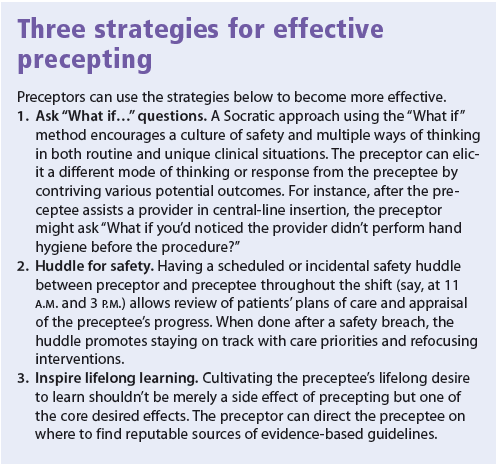
The preceptor council’s deliberation at the Hospital for Special Surgery conducted a pre- and post-training survey to assess how full-day preceptor training was received and to appraise participants’ attitudes toward precepting. Another survey was sent to trained preceptors after they precepted a new staff member. Compared to pre-training survey data, post-training data indicated an improved level of comfort and confidence in precepting and an overwhelmingly positive attitude toward the preceptor role. (See Three strategies for effective precepting.)
Three strategies

Preparing future preceptors

Seen through the lens of the QSEN competencies, preceptor education prepares future preceptors not only as socializers of novice nurses into the profession, but also as guardians of patient safety and quality care. A conceptual or theoretical framework is an essential foundation for a well-designed preceptor education. In organizations with Magnet designation, creating a preceptor unit practice council fosters an impetus to provide evidence on measurable outcomes.

Fidelindo Lim is an assistant clinical professor at New York University College of Nursing in New York, N.Y. Kimberly A. Weiss is a clinical nurse specialist in the postanesthesia care unit and Ingrid Herrara-Capoziello is a clinical education specialist and coordinator in the Office of Professional Development at the Hospital for Special Surgery in New York, NY.

Selected references
American Nurses Association. Fast Facts. The Nursing Workforce 2014: Growth, Salaries, Education, Demographics & Trends. http://goo.gl/uwHPH5
Benner P. From novice to expert. Am J Nurs. 1982;82(3):402-7.
Benner P, Sutphen M, Leonard V, Day L. Educating Nurses: A Call for Radical Transformation. San Francisco, CA: Jossey-Bass; 2010.
Budden JS, Zhong EH, Moulton P, Cimiotti JP. Highlights of the National Workforce Survey of Registered Nurses. J Nurs Regulation. 2013:4(2):5-15.
Dreyfus SE, Dreyfus HL. A Five-Stage Model of the Mental Activities Involved in Directed Skill Acquisition. ORC, 80-2, Operations Research Center, University of California, Berkeley. 1980.
Ramsburg L, Childress R. An initial investigation of the applicability of the Dreyfus skill acquisition model to the professional development of nurse educators. Nurs Educ Perspect. 2012;33(5):312-6.
Tanner CA. Thinking like a nurse: a research-based model of clinical judgment in nursing. J Nurs Educ. 2006;45(6):204-11.
U.S. Department of Health and Human Services. Health Resources and Services Administration. Bureau of Health Professions. National Center for Health Workforce Analysis; April 2013. The U.S. Nursing Workforce: Trends in Supply and Education. http://goo.gl/ZjvLJs
U.S. Department of Health and Human Services. Health Resources and Services Administration. The Registered Nurse Population: Findings from the 2008 National Sample Survey of Registered Nurses. 2010. http://goo.gl/1iyvPO

Monday, February 8, 2016

Compassion fatigue: Are you at risk?

compassion fatigue

Compassion fatigue: Are you at risk?


Publication Date: January 2016 Vol. 11 No. 1
Author: Kate Sheppard, PhD, RN, FNP, PMHNP-BC, FAANP

For many of us, nursing isn’t just what we do; it’s who we are. Most of us became nurses because we care about people and want to make a difference in their lives.
Over time, nurses develop a nursing intuition and a working knowledge of disease and trauma. Our intuition, knowledge, and caring don’t automatically shut off when we leave work. For example, have you ever seen a worrisome mole on a complete stranger? Have you felt concern about a friend’s weight or a neighbor’s smoking habits? Have you ever been in a public place when you heard someone coughing—and wondered at what point you might intervene? These experiences are common among nurses. Yet, inability to shut off our knowledge and caring may leave us feeling emotionally saturated and raise our risk for compassion fatigue.

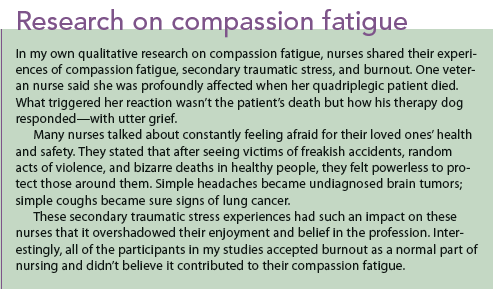
Ideally, as nurses, we should feel satisfied with our work and derive satisfaction from providing excellent care. Compassion fatigue has been defined as loss of satisfaction that comes from doing one’s job well, or job-related distress that outweighs job satisfaction. Sometimes, merely being exposed to another’s traumatic experience leaves us feeling emotionally distraught. Called secondary traumatic stress, this is a part of compassion fatigue. As our sense of job satisfaction decreases, we may feel more burnout. A reaction to our work environment, burnout can stem from such conditions as short-staffing, long work hours, workplace incivility, and feeling dismissed or invalidated. (See Research on compassion fatigue.)
Research on compassion fatigue

Who gets compassion fatigue?

Compassion fatigue can happen to any nurse—and it can be unpredictable. We know that nurses who work in oncology or see more patient deaths may be at greater risk. Also, when we form close, caring relationships with patients (especially if we lose our personal boundaries), we may be putting ourselves at higher risk.
Sometimes a particular patient or a patient’s family member may remind us of someone important in our lives. If that patient or family member has died, we may be triggered emotionally. Many nurses I interviewed in my research described being triggered unexpectedly and profoundly by a smell (caring for a child with second- and third-degree burns over 50% of his body), a sound (a mother screaming with grief when told her 3-year-old child had coded and died), or a sight (a dog on the hospital bed with his head across his master’s chest). Nurses who skip breaks, take extra shifts, or come in on their days off out of a sense of duty may be more at risk for compassion fatigue. One of the greatest risks for compassion fatigue comes when nurses forgo their own self-care.

What does compassion fatigue feel like?

In many cases, the first symptoms are emotional. Nurses talk about feeling bored with their work or feeling detached and distant from patients and colleagues. They may realize they’re irritable and short-tempered. They may feel they’ve failed to relieve a patient’s pain or to help a patient get well, losing their sense of pride in being a nurse.
Frequently, nurses with compassion fatigue talk about sleepless nights as they worry about what they forgot to do at work or replay disturbing events in their minds. They may be forgetful at work, in school, or at home. As compassion fatigue progresses, physical symptoms typically arise. Most nurses describe feeling physically and mentally exhausted, and many report headaches or backaches. Frequently, I hear nurses say they feel queasy just driving to work, and those feelings intensify as they walk in the door.
What happens to nurses who don’t deal with compassion fatigue symptoms? First, their work performance changes; for example, they may be at risk for medication errors. Without realizing why, they may start to call in sick more frequently. They may be short-tempered, sarcastic, or rude to colleagues and even to patients or families. They may appear tired and may become more easily startled.
Unfortunately, they may attempt to reduce their emotional saturation through alcohol or drug use. Ultimately, when emotional saturation becomes too intense, some nurses may view leaving the profession as the only means of escape.

Can you have compassion fatigue but still feel compassion?

Absolutely. In my studies, some nurses volunteered that they felt symptoms of compassion fatigue, yet stated, “But I also still feel compassion.” Clearly, a nurse can have symptoms of compassion fatigue while still feeling compassion. If anything, the more compassion a nurse feels, the greater the risk that she or he will experience emotional saturation or compassion fatigue.

Reducing compassion fatigue

What can you do to reduce or even prevent compassion fatigue? Start by being aware of how you feel physically and emotionally. If you realize, for example, that interactions with a specific colleague often feel uncomfortable or unpleasant, reflect on that a bit. Explore what’s beneath that feeling.
Perhaps you feel overlooked, ignored, invalidated, unfairly treated, or criticized—but instead of accepting those feelings and trying to make a change, you compound your feelings with guilt and shame. When you experience negative emotions, pay attention to how you feel physically. By bringing physical and emotional feelings to the surface, you can more efficiently address the underlying cause.

Establish healthy boundaries.

Establishing healthy boundaries is an important way to reduce the risk of compassion fatigue. Many of us face minor boundary issues frequently without really considering the consequences. Examples might include answering a question you feel uncomfortable with, sharing personal information you’d prefer to keep private, doing a favor for someone not because you want to but because you feel you have to, having someone hug or touch you in a way that makes you uncomfortable, and tolerating a rude or pushy person. By slowing your response and doing some self-reflection, you can address these issues with firm but courteous responses.

Make self-care and self-compassion priorities.

Perhaps the most important way to prevent or reduce compassion fatigue is to take care of yourself. As nurses, we work hard and really need our breaks. We need to eat, and to take time for ourselves without being interrupted by alarms, patients, or colleagues. We also need our time off, for our mental and physical well-being.
Before you were a nursing student and nurse, you probably had hobbies or activities you enjoyed. But later, between working long hours and trying to balance your personal and professional lives, those hobbies and activities were probably the first things you let go of. So try to bring them back into your life. Take the dog for a walk every day, listen to music, read a book for pleasure, go for a hike, call a friend—do something for yourself every day.
Self-compassion is important, but it may be hard to attain. Start noticing how you talk to yourself when frustrated, upset, or angry. Do you berate or criticize yourself? Try replacing that talk with kindness, just as you might talk to a loved one.

Practice self-reflection and mindfulness.

Parts of your job may make you feel frustrated because you feel powerless. As burnout and compassion fatigue build, your emotions may grow so strong that they become an overwhelming blur of anger, resentment, frustration, or helplessness.
Thoughtful and quiet self-reflection away from work may help you slowly separate events, interactions, and experiences. By examining each event or interaction, you can become more aware of your triggers (specific people, situations, or events) and address each one individually. Even if you can’t change your work environment, you can find power within by listening to your emotions with kindness and approaching colleagues and others from a wise and centered perspective.
Mindfulness is an important part of self-compassion. Although mindfulness has its roots in Buddhist meditation, it’s also a secular cognitive practice in the form of mindfulness-based stress reduction.
To practice mindfulness, take note of the present and pay attention with kindness and curiosity. You may notice physical or mental feelings of pain, fatigue, or pleasure. If you feel pain, ask yourself what your body or mind is trying to tell you—and address those concerns. By engaging in mindfulness, you can learn to identify which areas of your body react to your emotions. Mindfulness can reduce stress and anxiety and improve your physical and mental well-being. Through self-reflection and mindfulness, you allow yourself to consider events and triggers, learn from them, forgive yourself, and move forward.

Taking action

We can all reduce our risk of compassion fatigue and emotional saturation by reflecting on our triggers, practicing mindfulness, replacing self-criticism with kind self-talk, and engaging in daily self-care activities. Finally, if you’re suffering from sleeplessness, poor self-care, loss of interest, or other symptoms of distress, reach out for help from an employee assistance program or a mental health provider.

Kate Sheppard is a clinical associate professor and the psychiatric–mental health nurse practitioner specialty coordinator at the University of Arizona College of Nursing in Tucson.

Selected references
Hinderer KA, VonRueden KT, Friedmann E, et al. Burnout, compassion fatigue, compassion satisfaction, and secondary traumatic stress in trauma nurses. J Trauma Nurs. 2014;21(4):160-9.
Maiden J, Georges JM, Connelly CD. Moral distress, compassion fatigue, and perceptions about medication errors in certified critical care nurses. Dimens Crit Care Nurs. 2011;30(6):339-45.
Neville K, Cole DA. The relationships among health promotion behaviors, compassion fatigue, burnout, and compassion satisfaction in nurses practicing in a community medical center. J Nurs Adm. 2013;43(6):348-54.
Sheppard K. Compassion fatigue among registered nurses: connecting theory and research. Appl Nurs Res. 2015;28(1):57-9.

Tuesday, February 2, 2016

Nurse Safety and Workplace Violence

Being safe: Dealing with injuries, violence in the workplace
Chapter from A Nurse’s Step-By-Step Guide to Transitioning to the Professional Nurse Role, an STTI book.
By Cynthia M. Thomas, Constance E. McIntosh, and Jennifer S. Mensik


​In this chapter from A Nurse’s Step-By-Step Guide to Transitioning to the Professional Nurse Role, the authors examine the types of violence nurses face and provide strategies to reduce violent behavior.


As you transition to the registered nurse (RN) role or to a new role within the professional practice, you may encounter some difficult people who exhibit a variety of violent behaviors. Healthcare is not immune to violence. As a nurse you are interacting with many people who are ill, under stress, anxious, under the influence of drugs or alcohol, living with mental health disorders, or fearful of the future. Patients, family members, and even your peers may not handle stress well or may become overwhelmed by the pressures of difficult situations. You may have already experienced or witnessed violent behaviors from a patient, family member, or, sadly, another nurse or physician. Our goal in this chapter is to alert you to the many forms of violence in healthcare and provide strategies to reduce or defuse the behaviors.
Types of Workplace Violence
Violence in the workplace is not new, and nursing is not an exception to violence. In fact, workplace violence occurs in healthcare more often than it does in any other workplace environment (Howard & Gilboy, 2009). In 2013, Speroni, Fith, Dawson, Dugan, and Atherton found that 76% of nurses reported experiencing a verbal or physical attack (2013). The United States Bureau of Labor Statistics (2010) reported healthcare employees were the victims of over 11,370 assaults, a 13% increase since 2009. Violence in the workplace is considered to be acts of physical and verbal assaults and threats aimed toward a person while that person is at work (Howard & Gilboy, 2009). There were at least 2,130 assaults occurring in nursing and residential care facilities, and assaults are most likely a higher number since many assaults are not reported.
The assaults can inflict physical or emotional harm to employees, visitors, and patients (McPhaul & Lipscomb, 2008; Papa & Venella, 2013). Though much of the violence comes from patients, nurse-to-nurse violence is one of the highest forms, followed by physician-to-nurse (Thomas, 2010).
Violence comes in many fashions (see Table 8.1), including threatening behaviors, verbal and written statements, and physical attacks of biting, hitting, kicking, shoving, throwing things, and pushing people (Sullivan, 2013). More violent behaviors might include the use of guns or knives, rape, sexual harassment, or murder (Sullivan, 2013).
There are many names for violence in the workplace, such as lateral violence, horizontal violence, and bullying (Thomas, 2010). Many states are taking a more proactive approach to stopping violence in healthcare facilities by making it a felony to assault or commit battery against emergency department nurses (Trotto, 2014). There is a drive to have Congress pass legislation for increased preparation for, recognition of, and de-escalating of violent behaviors in healthcare organizations (Trotto, 2014).

Table 8.1 Common Types of Workplace Violence 

Nurse-to-Nurse
Physician-to-Nurse
Patient-to-Nurse
Yelling in the nursing station, hallway, or patient room
Throwing things at a person or in a room
Kick, a physical act
Not acknowledging a request by simply avoiding or walking
away from the person
Making derogatory remarks toward a
person or to others
Hit, a physical act
Sighing, a covert action (not openly displaying behavior)
Making sexual
comments to a person
or to others
Biting, a physical act
Eye rolling, a covert action (not openly displaying behavior)
Yelling directly or indirectly to the person
Throwing things, a physical act
Gossiping about the person to others
Hanging up on a phone call
Threatening a person directly or indirectly
Making rude comments to a person or to others
Making demeaning remarks directly or indirectly to the person
Using guns, knives, or other weapons directly or indirectly on the person
Threatening someone
Making a person the brunt of jokes directly or indirectly
Calling the person names or referring negatively to gender, sexual orientation, or ethicality
Excluding someone
from the team
Making threatening comments directly to the person


What Causes Violence?
The nurse’s job can at times be stressful. Nurses often work 12-hour shifts in difficult situations. They are working with a variety of people with different personalities and coping mechanisms, and often people have unrealistic expectations of nurses and other healthcare providers. When people are sick, they frequently behave differently. Patients and family members may exhibit a fear of the unknown and lash out in frustration.
Gates, Gillespie, and Succop (2011) believe that working in healthcare increases the risks for violent behaviors, much of it being created by stress. In addition, emergency departments are prone to violent behaviors by nature of psychiatric and confused patients, alcohol and drug abusers, and violent patients such as murderers and gang members (Gates et al., 2011; Wood & Brott, 2013). Psychiatric departments and hospitals, emergency departments, geriatric facilities such as Alzheimer’s facilities, and overcrowded waiting rooms are potential areas for increased violent events (Nachreiner et al., 2007). Additionally, nurses who work alone or with limited staff, who work in areas with longer waiting times, and who spend time in less secure spaces like parking lots and dimly lit areas are at increased risk of violent behaviors (Glacki-Smith et al., 2010; Sullivan, 2013).
Reducing the Risk of Being a Victim of Violence
No one should be subjected to violent behaviors regardless of the magnitude of the behavior. The workplace should be a safe environment that is free from intimidation and fear. Nurses should not hesitate to ask questions and seek help when needed. 
Realistically, policies are effective only if the people working within the organization are willing to enforce them. Be willing to report someone who is bullying or displaying violent behaviors toward you. 
The Joint Commission mandated that all healthcare organizations have a zero-tolerance policy and procedure in place to address and eliminate violence from the work environment (The Joint Commission, 2012). You can review this policy at http://www.jcrinc.com/assets/1/7/ECNews-Jan- 2012.pdf. Knowing your organization’s policies and procedures on violence is vital and helps to protect you as a potential victim.
Nurses must know the warning signs of an impending violent event and be able to either defuse it or get help. Consider these great tips to recognize violent warning signs when someone:
  • Stands close or moves aggressively toward you
  • Yells or escalates his or her voice when you attempt to talk to the person
  • Elevates his or her arms in a fighting or striking position
  • Stares blankly or appears disconnected
  • Clenches or hits his or her fists
  • Possesses or brandishes a weapon of any type: pen, knife, gun, heavy object, or even a patient chart
  • Makes angry comments such as “I’m going to kill you” or “I’m going to knock your brains out” or “I’ll be waiting for you in the parking lot”
  • Attempts to prevent you from leaving or moving out of the way by standing in front of you or barring the door or exit
  • Bars you from retreating to a safe place (Sullivan, 2013; Wood & Brott, 2013)
Following are the steps you can take in these situations to protect yourself and others:
  • Do not approach or try to take a weapon from a person.
  • Do not turn your back on the person, but slowly walk backward, keeping your vision on the person at all times.
  • Call Security or 911, or call out for help or for someone else to call 911 or Security.
  • Remain calm and avoid threatening a violent person, slow your breathing, and change the subject, if necessary.
  • Protect other patients, close other patient room doors, lock unit or office doors, and direct people away from the area.
  • Do not allow the violent person to be close to the door if in a room; remain by the door so that you can exit quickly if needed.
  • Move to a safe area. (Sullivan, 2013; Wood & Brott, 2013)
Report abusers immediately, using the appropriate steps in your organization.
The Not-So-Obvious Workplace Violence
The sad fact is that violence is a negative part of healthcare, and nurses must learn how to recognize and protect themselves from falling victim to such behaviors. Most nurses have been subjected to some form of violence during their careers (Speroni et al., 2013; Thomas, 2010). Maybe you have also, but brushed it off as just part of the job. The incident may be as simple as another nurse rolling her eyes when asked a question or reach the level of bearing witness to a physician throwing a chart or personally experiencing sexual harassment.
New nurses are especially vulnerable to violence but may not recognize it as such (Thomas, 2010). Some not-so-obvious violent behaviors are someone giving the silent treatment, sighing, walking away when approached, refusing to help when asked, giving angry looks, and excluding others. Consider the following examples of not-so-obvious bullying incidents.
The Eye Roll
What it is: You may recall as a child rolling your eyes whenever your parents told you to do something you didn’t want to do. It was a subtle covert action that indicated your displeasure with something.
Example: Mary, a new nurse, asks Bill, an experienced nurse, for help to program an IV infusion machine. Bill rolls his eyes so that other nurses can see his objection to the request and pretends that he does not hear Mary.
Ways to deal with it: Mary should confront Bill about the incident. Mary is confronting Bill’s behavior, not Bill personally. Mary might say something like this: “I know I ask for help often, but I am still learning. You are the best nurse to help me because you are so good with problems like troubleshooting the IV machines.” This statement lets Bill know that Mary values his help and expertise and potentially defuses a violent behavior.
Ignoring
What it is: Ignoring happens when you make a request or ask a question to another person who does not acknowledge you or the request.
Example: Rose, an LPN, was floated to the 4South medical unit today. She has never worked on this unit and is unsure of the routines. Rose asks Connie, one of the regular unit nurses, when vital signs are generally taken. Connie responds by simply ignoring Rose. In fact, Connie gets up and walks out of the nursing station without addressing Rose’s question.
Ways to deal with it: One way to deal with ignoring situations is to confront the person about the behavior. You might say something like this: “I have never worked on this unit, and I am willing to do whatever work I am qualified to do, but I need some initial direction about the unit routine. Would you be willing to answer some of my questions?”
The Angry Doctor/Teammate
What it is: Dr. Jackson is well known for his difficult behaviors, and in fact, many nurses simply accept his behaviors and pass along this advice: “Well, that’s just how he is, and you will get used to him.”
Example: Sally, an RN, is assisting Dr. Jackson with a bedside lumbar puncture procedure. Dr. Jackson asks for a medication that is not normally given during the procedure and is not among the medications in the room. Sally informs him that she will have to leave the room or call another nurse to obtain the medication, which will delay the procedure. Dr. Jackson lashes out at Sally, yelling and cursing that she should have been more prepared and he will report her to the nurse manager.
Ways to deal with it: Sally should not accept the abusive behavior that Dr. Jackson is displaying. An appropriate response would be for Sally to calmly state, “Dr. Jackson, I will not accept being cursed at or yelled at by you. If I had been notified prior to the procedure that you might want that particular medication, I would have ensured it was present. If I step out of the room to obtain the medication, it might present a safety issue for the patient; therefore, I will call another nurse to obtain the medication as soon as possible.”
Excluded from the TeamWhat it is: Being excluded from the team is another form of violence. It implies that you are not worthy, that you are not part of us, that we don’t care about you. Being excluded may result in a hostile work environment.
Example: Cheryll was a new registered nurse working the night shift on a busy medical surgical unit. The more experienced nurses had all been working together on the unit for at least 6 years and were friends outside the organization as well. Cheryll had never felt part of the team, because the nurses tended to exclude her from conversations or not invite her to social events outside of work.
Ways to deal with it: The unit was particularly busy one night with several new admissions from the emergency department. Cheryll had completed only two admission assessments on her own and was concerned about her ability to complete the admission assessment on a patient with multiple acute health issues and family members with lots of questions. She decided to seek help from Beth, one of the more experienced nurses, who was sitting at the nursing station.
When Cheryll asked Beth for help completing the admission assessment, Beth pretended she did not hear Cheryll and walked out of the nursing station. Frustrated, Cheryll decided to find Beth and ask her again for help. As she approached a patient room, Cheryll overheard Beth talking about her to another nurse on the unit. “She is so stupid. What did they teach this girl in nursing school, anyway? She can’t do anything for herself. I wish they would have never hired her. She doesn’t fit in.”
Subsequently, Cheryll went back to her patient room and completed the admission assessment on her own. The next evening when she reported to work, the nurse manager asked to meet with her. Cheryll was given a written warning, composed by Beth, for making an error of omission for a routine medication the patient had been taking before the hospital stay. Cheryll was so upset that she resigned her position to evaluate whether she should remain a nurse.
Being excluded from the team can be very difficult. Exclusion is also a form of violence because it sets the person apart and sends the message “You are not one of us.” Cheryll should have confronted the nurse’s actions and explained that she is new to nursing and to the unit and needs help from experienced nurses. If Cheryll believes the nurse’s actions are creating a hostile work environment, she would need to make a formal complaint to the nurse manager. Though it is not required that a nurse is included in personal activities outside of the work environment and it is not necessary that everyone likes everyone else, nurses must be respectful to each other and work as a team or a cohesive group to maintain a safe, quality work environment.
Workplace Injuries
Many injuries are the result of workplace violence and need to be addressed to bring awareness and to support education and prevention programs. Other situations happen in healthcare organizations resulting in workplace injuries that may have been prevented. Nevertheless, nurses must be aware of potential risk factors in healthcare organizations to minimize their risk of injury.
Knowing how to avoid injuries and employ proper safety techniques for yourself and your patients is vital. Not surprisingly, injuries such as in the back and neck occur most often in healthcare environments and are estimated to cost more than $7 billion every year (Nordqvist, 2013). The American Nurses Association (ANA) statement makes it clear that back, neck, and shoulder injuries are preventable with the proper education and equipment (Nordqvist, 2013).
Many types of injuries can happen in healthcare organizations. The Centers for Disease Control and Prevention (CDC) reported that healthcare workplace injuries included needle sticks, latex allergies, back and neck injuries, violence, stress, exposure to chemicals, disease, and illnesses such as blood- borne pathogens (2014a). Nonfatal injuries in healthcare rank among the highest of any industry (CDC, 2014a).


The law mandates, though it may be difficult, that employers provide a safe environment for workers. The nature of healthcare predisposes nurses to viruses, bacteria, and a large number of illnesses. Exposure to needle stick injuries places nurses at risk for the hepatitis B and C viruses as well as for human immunodeficiency virus (HIV) (CDC, 2014b).
We tend to think of sharps primarily as needles, yet nurses work in a variety of places and are exposed to a multitude of sharp items. Among the more common are scalpels, lancets, razor blades, scissors, wire, retractors, clamps, pins, staples, cutters, and glass (Canadian Centre for Occupational Health and Safety [CCOHS], 2014). Some diseases contracted through sharps injuries are brucellosis, diphtheria, cutaneous gonorrhea, herpes, malaria, staphylococcus, syphilis, toxoplasmosis, and tuberculosis (CCOHS, 2014).
Unfortunately, sharps are often easily accessible to someone intent on harming another person. It would not be particularly difficult to pull used syringes from a needle box hanging on a wall, use the foam antiseptic spray to temporarily blind someone, or grab some lancets to stab another person. Heavy or falling equipment, burns, and inhalants can also injure nurses. Therefore, nurses must be diligent in maintaining safety awareness for not only their patients but also themselves.
Musculosketal injuries are among the most frequent physical injuries and are attributed to moving patients from the bed to the chair or stretcher, repositioning, and attempting to prevent a patient from falling (Stokowski, 2014). Additionally, repeated tasks that require bending, pushing, and pulling may also be problematic (Stokowski, 2014).
The impact of the injury may not be fully realized until much later, as it is the cumulative effect that is most troubling to the nurse.
If you have experienced a musculosketal injury, be sure to complete and submit the organization’s incident report. You should also be seen by a physician or another care provider for a physical assessment to determine the extent of the injury.
To prevent further injury, follow the organization’s policies and procedures for proper lifting, transferring, and moving patients. If the organization provides lift equipment, you need to use it. If you do not, get additional help when moving patients or doing any type of heavy lifting. If you have been placed on lifting restrictions, follow them for the stated length of time. Review and implement proper body mechanics for lifting.
Nurses may also be accidentally shocked by equipment and emergency resuscitation paddles, and there is the potential to be burned by using cauterization machines. Cleaning solutions and disinfectants may cause inhalation problems and exacerbate allergies.
Many nurses work in radiation therapy and therefore are at risk for radiation exposure and burns. Because radiation is invisible and odorless, there is no way to be sure of exposure. At the minimum, nurses may experience nausea, vomiting, erythema, dermatitis, and diarrhea; however, long-term exposure may cause cancer, sterilization, bone marrow suppression, congenital defects, and death (Stokowski, 2014).
Nurses working with lasers are potentially at risk for thermal injury to the skin and eyes (Stokowski, 2014). Surgical nurses are in danger of inhalation problems from toxic gases and blood-borne pathogens (Pierce, Lacey, Lippert, & Franke, 2011).
You must use caution when handling urine, stool, blood, and emesis by wearing gloves and a face shield when necessary. The Occupational Safety and Health Administration (OSHA) has developed the simplified document Hazard Communication Standard, providing a more common and understandable approach to categorizing chemicals and communicating hazard information. The updated document is the Employee Right to Understand, at https://www.osha.gov/dsg/hazcom/ghd053107.html (Stokowski, 2014). Though Stokowski points out that proper education is paramount, avoiding the chemicals when possible is preferred (2014).
Protecting Yourself
No one will protect you like you will. Be in control of your personal well-being. Know the policies on workplace violence where you work, and know how to prevent it from happening or how to report violent behaviors from others. Ensure that you are aware of the organization’s policies and procedures for workplace safety. Know where to locate the information and what to do if you find faulty equipment or if you or a coworker is injured. Follow all isolation procedures and other safety precautions established in your organization. Be aware of your surroundings and of the people who are present when you are working. Most importantly, know how to protect yourself from developing a workplace injury or from being a victim of violence.
The following list gives you some ways to protect yourself:
  • Wear protective gear when appropriate, such as a mask, an eye shield, gloves, shoe covers, and gown.
  • Do not recap needles.
  • Use needleless devices when appropriate.
  • Dispose of used needles immediately into sharps containers.
  • If you are moving across the room to dispose of a used syringe, hold the syringe upright in front of you to avoid sticking yourself or others.
  • Engage in safety continuing education programs.
  • Use adequate lighting.
  • Check instrument trays for sharp spots before picking up.
  • Avoid chemical exposure, wear proper protective clothing when necessary, and avoid exposure when possible.
  • Minimize radiation exposure by wearing protective clothing and avoiding radiation when possible.
  • Properly dispose of contaminated material.
  • Complete and submit an incident report if you sustain an injury, and seek a medical assessment to substantiate the injury.
  • Stop workplace violence, know your organization’s policies, refrain from violent behavior, confront situations whenever possible, and report people who exhibit violent behaviors.
Healthcare organizations are complex, and many people come and go every day. Nurses are caring for patients with a variety of emotional, psychosocial, and physical illnesses. Family members may be stressed and may lack coping skills to deal with complex and emotional decisions.
Violence in healthcare organizations is among the highest in all working environments, and it impacts the safety of not only nurses but also other providers of care and our patients. Violence may come in many forms, from the not-so-obvious eye rolling and sighing to more violent behaviors such as gunshots, stabbings, and physical assaults that may result in physical and emotional injury and even death.
In addition, nurses are working with lots of different equipment, some of it heavy, bulky, and unstable and often in confined spaces. Nurses are also exposed to many different hazards such as inhalants, topical chemicals, blood-borne pathogens, diseases, high-voltage electrical equipment, and instruments that may result in puncture wounds or skin lacerations. Nurses should be aware of the many potential hazards in the workplace and opportunities for people to commit violent behaviors and then learn how to protect themselves from violence and injury.
Chapter Checkup
Key points from this chapter include:
  • As a nurse, you will face violence, in both obvious and non-obvious ways.
  • Recognize the many types of violent behaviors.
  • Reduce the possibility that you become a victim of violence.
  • Avoid workplace injuries.
  • Protect yourself from an injury.
  • Know what to do if you sustain an injury. RNL 
Cynthia M. Thomas, EdD, MS, RNc, is an associate professor at Ball State University School of Nursing. Constance E. McIntosh, EdD, MBA, RN, is an assistant professor at Ball State University School of Nursing. Jennifer S. Mensik, PhD, MBA, RN, NEA-BC, FAAN, is executive director of On Nursing Excellence and the Institute for Staffing Excellence and Innovation.
Information on purchasing A Nurse’s Step-By-Step Guide to Transitioning to the Professional Nurse Role.
References
Canadian Centre for Occupational Health and Safety (CCOHS). (2014). Needlestick and sharps injuries. Retrieved from http://www.ccohs.ca/oshanswers/diseases/needlestick_injuries.html
Centers for Disease Control and Prevention (CDC). (2014a). Preventing needle-stick injuries in healthcare settings. Retrieved from http://www.cdc.gov/niosh/docs/2000-108
Centers for Disease Control and Prevention (CDC). (2014b). Workplace safety and health topics. Retrieved from http://www.cdc.gov/niosh/topics/healthcare
Gates, D. M., Gillespie, G. L., & Succop, P. (2011). Violence against nurses and its impact on stress and productivity. Nursing Economics, 29(2), 59–66.
Glacki-Smith, J., Juarez, A. M., Boyett, L., Homeyer, C., Robinson, L., & Maclean, S. (2010). Violence against nurses working in U.S. emergency departments. Journal of Nursing Administration, 39(7–8), 340–349.
Howard, P. K., & Gilboy, N. (2009). Workplace violence. Advanced Emergency Nursing Journal, 31(2), 94–100.
McPhaul, K. M., & Lipscomb, J. A. (2004). Workplace violence in healthcare: Recognized but not regulated. The Online Journal of Issues in Nursing, 93(3). Retrieved from www.nursingworld.org/MainMenuCategories/
ANAMarketplace/ANAPeriodicals/OJIN/TableofContents/
Volume92004/No3Sept04/ViolenceinHealthCare.html
Nachreiner, N. M., Hansen, H. E., Okano, A., Gerberich, S. G., Ryan, A. D., McGovern, P. M., … Watt, G. D. (2007). Difference in work-related violence by nurse license type. Journal of Professional Nursing, 23(5), 290–300.
Nordqvist, C. (2013, July 20). Healthcare most dangerous place for workplace injuries. Medical News Today. Retrieved from http://www.medicalnewstoday.com/articles/263709.php
OSHA and Worker Safety Joint Commission. (2012). Environment of care news, 15(1). Retrieved from http://www.jcrinc.com/assets/1/7/ECNews-
Jan-2012.pdf
Papa, A., & Venella, J. (2013). Workplace violence in healthcare: Strategies for advocacy. The Online Journal of Issues in Nursing, 18(1). doi: 10.3912/OJIN.Vol18NO01Man05
Pierce, J. S., Lacey, S. E., Lippert, J. F., & Franke, J. E. (2011). Laser-generated air contaminants from medial laser applications: A state of the science review of exposure characterization, health effects, and control. Journal of Occupational Environment Hygiene, 8, 447–466.
Speroni, K. G., Fitch, T., Dawson, E., Dugan, L., & Atherton, M. (2013). Incidence and cost of nurse workplace violence perpetrated by hospital patients or visitors. Journal of Emergency Nursing, 40(3), 218–228. doi: http://dx.doi.org/10.1016/j.jen.2013.05.014
Stokowski, L. A. (2014). The risky business of nursing. Medscape Family Medicine, 2–8. Retrieved from www.medscape.com/viewarticle/818437_2
Sullivan, E. J. (2013). Effective leadership and management in nursing (8th ed.). Upper Saddle River, NJ: Pearson.
Thomas, C. M. (2010). Teaching nursing students and newly registered nurses strategies to deal with violent behaviors in the professional practice environment. The Journal of Continuing Education in Nursing, 41(7), 299–310.
Trotto, S. (2014). Workplace violence in health care. Safety & Health. Retrieved from http://www.safetyandhealthmagazine.com/articles/print/11172-workplace-violence-in-health-care- nurses
United States Bureau of Labor Statistics, Occupational Safety & Health Administration. (2010). Workplace violence. Retrieved from https://www.osha.gov/SLTC/healthcarefacilities/v iolence.html
Wood, H., & Brott, E. F. (2013). Key considerations: Healthcare workplace violence. Pro Assurance, 6(1), 2–7. Retrieved from www.proassurance.com/pdfindex/?guid=2a57e11c-7cc6-45fa-8c1e- b2c147a79265

Tuesday, January 26, 2016

What do you do with a PhD in nursing?


I now view the question as an opportunity to educate.
By Tiffany Montgomery


Almost weekly, I am asked about my choice to pursue a Doctor of Philosophy in nursing. The frequency of this makes me wonder if the general public only sees nurses as bedside handmaidens who take orders from physicians. The more frustrating thing is when these probing questions come from other PhD students.
I was shocked the first time I was asked by a non-nursing PhD student, “What do you do with a PhD in nursing?” I’ve now grown used to hearing this question from my doctoral colleagues outside the school of nursing. Still, it’s quite bothersome, because the question usually isn’t framed as an inquiry about what area of research I’m interested in or what type of employment I plan to seek upon graduation. It’s more, “Why in the world would a nurse want a PhD?”
Before I became accustomed to the question, I wasn’t sure how to answer it. Oftentimes, it was difficult to decipher whether or not the person asking was trying to be sarcastic (especially if the question came from another PhD student). At one point, I became irritated by the question and started giving a pretty snappy reply: “The same thing you do with a PhD in anything else!”
After completing a year of doctoral studies, however, I now realize that the general public is unaware of all the wonderful avenues available to nurses. So, now I view the question as an opportunity to educate.
What do you do with a PhD in nursing? Whatever you want! There are PhD-prepared nurses who teach, conduct research, evaluate programs, write books, lead health care organizations and work for the government. With a doctoral degree, the sky is the limit. One thing I doubt most nurse PhDs want to do is work full time in direct patient care. At the doctoral level, nursing is less about hands-on patient care and more about the abstract thinking that helps move the profession forward. More than anything else, a nurse with a PhD has the training needed to conduct research and add to the body of available nursing research knowledge. While not all PhD-prepared nurses choose to work as researchers, all have been exposed to great amounts of research and have had to demonstrate their ability to conduct high-quality research on their own.
Three jobs I’ve noticed that most PhD-prepared nurses consider are listed below. The job descriptions provided are based on my observations of nurses employed in these positions, and they may vary from facility to facility:
Nursing faculty member—A nurse educator who works in an AS, BSN, MSN or PhD program as a classroom instructor. Nurse faculty members are also responsible for creating, implementing and evaluating program curricula and mentoring nursing students. Oftentimes, in addition to their teaching responsibilities, they are expected to conduct research. They typically disseminate this research in scholarly journals and at research conferences.
Director of nursing research—a nurse researcher who serves as administrator of the nursing research department of a health care facility or coordinator of the facility’s nursing research program. The director may supervise other nursing research employees, or he or she may be responsible for overseeing all nursing research projects conducted within the facility. The director of nursing research is typically the go-to person within the facility for questions regarding the design and implementation of a desired research study. He or she may or may not be responsible for dissemination of research findings.


Director of clinical services—a clinical administrator who oversees daily operations of patient care departments in a health care facility. He or she is the liaison between upper management and department managers. Although the director is not involved in direct patient care, he or she is aware of the work flows in each department that promote optimal patient care. The director may generate or receive reports addressing the efficiency of departmental work flows, and this information is then given to each department manager in an effort to increase efficiency and patient satisfaction.
Other jobs available to PhD-prepared nurses include research or high-ranking administrative positions in pharmaceutical companies, research institutes, health advocacy organizations, health care information technology corporations and nursing or other health-related publishing companies. A nurse who has attained a PhD can practically work anywhere that research, education, or program evaluation takes place. The important thing to remember is that graduation from a reputable PhD program ensures that a nurse has received proper research training.
If you have any additions to the types of jobs held by nurses with PhDs, please post below. I’d like to learn of new opportunities for nurses with the terminal degree. RNL