Tuesday, October 27, 2015

Scrubs May Carry S. Aureus

Student Nurse Scrubs May Carry S. Aureus

By Rita Buckley

NEW YORK (Reuters Health) - Scrub tops worn by student nurses may harbor methicillin-sensitive Staphylococcus aureus (MSSA) even after laundering, researchers say.
Dr. Elizabeth Scott, from Simmons College in Boston, and colleagues say contaminated student scrubs may carry the pathogen out of the hospital and into the community.
The researchers used two electronic surveys to gather information on 89 students' clinical work settings and laundry habits. Study participants also swabbed their scrub tops after shifts and again after laundering.
The researchers found no evidence of methicillin-resistant S. aureus (MRSA) on any pre- or post-laundry swabs, according to an article online July 2 in the American Journal of Infection Control.
However, 17% of pre-laundry swabs tested positive for MSSA after clinical shifts. Of these, 64.3% were clear of it after laundering and the rest remained positive.
Four scrubs that were negative for MSSA before laundering tested positive afterward. Use of hot water, bleach, ironing, or dryer time did not make a statistically significant difference in the clearance of MSSA. Neither did laundering.
Of the students surveyed, 31.5% lived on campus. Roughly half (51.7%) worked at academic medical centers, with 34.8% on medical surgical units.
Close to 60% of the student nurses spent two days per week on clinical duty. Approximately one-third of the patients they cared for were on contact precautions.
More than 90% of the students wore their scrubs to and from the hospital, and 37% wore them on campus after their shifts.
Close to 70% lived off campus and did not use dormitory laundry facilities.
The nursing students rarely followed safe laundering guidelines that include daily hot water washing with bleach, hot air drying, and ironing.
Nearly half left their scrubs in a hamper for at least two days before cleaning them. Just over 90% washed them with other items, and 46.1% used warm water.
Only 5.6% of the students used bleach. Over 85% tumble-dried their scrubs, but just 3.4% ironed them.
Dr. Scott said it's likely that nursing students around the country have similar laundry habits to the ones observed in the study.
"To help reduce the risk of infection transmission in the hospital setting, it's important to establish good habits during nursing training, including best practices regarding clinical scrubs," she told Reuters Health by email.
All the same, laundry routines may be of little consequence.
"S. aureus is common," said Dr. David Hooper, chief of infection control at Massachusetts General Hospital in Boston, who was not involved in the study. "One-quarter to one-third of the population normally carry it, usually in their noses," he explained.
According to Dr. Hooper, it's impossible to tell where the bacteria in the study came from. "We don't even know if the scrubs were contaminated in the hospital," he said, adding that the report can't be interpreted in any useful way due to problems with its design.
Dr. Pritish Tosh, an infectious disease physician and member of the Mayo Clinic Vaccine Research Group at Mayo Clinic in Rochester, Minnesota, told Reuters Health by phone that the small sample and lack of statistical significance made the findings questionable.
"Hand hygiene is the most important mode of transmission, not scrubs," he said.
Dr. Tosh, who wasn't involved in the study, still thinks it has some value. "It can open the door to further research on ideal laundering techniques as well as actual transmission of bacteria," he said.
SOURCE: http://bit.ly/1OhFoex
Am J Infect Control 2015.

Wednesday, October 7, 2015

Nurses Are Talking About: Why They Go to Work Sick

by Laura A. Stokowski, RN, MS

Sick of Going to Work Sick

Imagine this scenario. You are an experienced, professional registered nurse who works the night shift in the coronary care unit. Every night, the hospital, the physicians, and everyone else depend on your acute assessment skills and your sound professional judgment to monitor very sick patients, detect the status changes that might precede deterioration, and take steps to ensure that your patients do not come to harm. Today, at 4:00 pm, you wake up with a sore throat, fever, and malaise. You call your supervisor and say that you are sick and cannot work tonight. The response? "You will need a doctor's note, or you won't be paid."
Seriously? The health and fate of scores of sick patients are regularly placed in your hands, but you are incapable of determining whether you are too sick to go to work? It would be comical if it wasn't such a serious and frequent problem. Every shift, every day of the year, nurses and physicians are compelled, through fear, guilt, or intimidation, to go to work when they are sick (known as "presenteeism"). And although healthcare employers profess to decry presenteeism, their policies and responses when employees call in sick suggest otherwise.
The news report "Many Docs Come to Work Sick: Survey", described a survey that found that many doctors, nurses, midwives, and physician assistants routinely go to work sick primarily because there is no coverage, and they don't want to abandon their colleagues or patients. More than 95% believed that working while sick puts patients at risk, but 83% still said they had gone to work with such symptoms as diarrhea, fever, and respiratory complaints during the previous year. Doctors were more likely than nurses or physician assistants to work while sick. Many expressed a strong cultural norm to go to work unless extraordinarily ill. This report provoked a swift and strong reaction from Medscape readers, beginning with the nurse (at work, sick) who found the news timely:
I am the first to say "shame on me" for coming to work today. I am so sick that I cannot stop coughing. Why am I here? We have an "attendance management program." If I am sick "too often," I will automatically be enrolled in this program to help "manage my sick time." My horribly inappropriate reasons for being absent earlier this year were chicken pox and whiplash following an accident. I guess I am just another nurse trying to "suck it up" today, and infecting my fellow nurses, to avoid disciplinary measures. My boss can clearly see and hear how sick I am yet has not offered to send me home.

The Guilt Trippers

Commenters overwhelmingly agreed that a strong motivation for going to work sick was the lack of coverage for the unit and the guilt that this engendered. Calling in sick invariably leaves your unit short-staffed. Knowing that you won't be replaced, and that your peers will have to carry the added burden created by your absence, is often enough to prompt clinicians to take acetaminophen or cough and cold preparations and drag their ill bodies into work. It is an age-old problem. "I have been a nurse for 43 years and nothing has changed," wrote a nurse. "There is no one to cover if you call off. Or your absence compels another nurse to work 14 days in a row or a 16- to 24-hour shift." Healthcare employers rarely make contingency plans for illness among the workforce. A Medscape reader wryly commented that nurses don't have the type of job in which we can just say, "No big deal if we don't give the meds today—we can catch up tomorrow."
Physicians and other clinicians who see patients regularly have similar problems when they are sick. An optometrist wrote, "I come to work sick because I feel guilty for cancelling an appointment that someone may have waited 2 months for."
One Medscape reader believes that physicians are victims of their socialization and acculturation, which begin in medical school:
It has been made clear since the onset of their education that only the strong survive, that there are no replacements, everyone is needed every day, and that to need time off for personal or family illness is a sign of personal failure and weakness. Surgeries and clinics cannot be canceled; what can we tell the patients who are depending on us? This is institution-speak for how will we replace the revenue, and how will we deal with the disappointment and inconvenience of the patients? It makes little sense. Who wants a compromised surgeon operating or a sick nurse or physician providing care in the clinic or hospital?
And a nurse added this: "I've caught some nasty viruses from sick doctors who should have been at home—I can appreciate their work ethic, but if I know when I'm not fit to work, why don't they?"
A family medicine physician agreed, saying, "We are too conscientious for our own good, and that of our patients! You can't heal anyone if you don't heal yourself first! And let's never forget: primum non nocere! Stay home when you are sick!"
In a sense, presenteeism is the response to a conflict of interest on the part of the nurse or other healthcare worker—the conflict between taking care of oneself (or family member) and fulfilling one's obligation to the workplace. Is it better to go to work and be "half a nurse," than no nurse at all?
Major nursing associations such as the American Nurses Association (ANA) do not have position statements on the issue of presenteeism, but they do have a code of ethics for nurses, which is particularly relevant to these issues. Thinking through the situation critically, and bearing in mind the nurse's ethical obligations to patients and to themselves, can be helpful. The ANA's newly revised Code of Ethics for Nurses With Interpretive Statements[1] states in part: "The nurse's primary commitment is to the patient." But what about the unit, coworkers, supervisors, and other colleagues who might suffer because of the nurse's absence?
Pertinent to presenteeism, the code of ethics addresses conflicts of interest directly, saying, "Nurses may experience conflicts arising from competing loyalties in the workplace, including conflicting expectations from patients...colleagues, [and] healthcare organizations... Nurses must examine the conflicts arising from their own personal and professional values, [and] the values and interests of others who are also responsible for patient care and healthcare decisions...Nurses address such conflicts in ways that ensure patient safety, and that promote the patient's best interests, while preserving the professional integrity of the nurse..."[1]
If the nurse is sick or otherwise unfit for duty, he or she may appropriately view it as an ethical obligation to not put patients at risk, either by exposing them to contagious illness or threatening their welfare by providing substandard care. The guilt that might accompany such a decision should be outweighed by the satisfaction of doing what is right for patients, not to mention coworkers who might become ill from close working contact with a sick colleague.

"You Are the Fourth Call-in"

Speaking of guilt, who hasn't heard this when calling in sick? Translation: "You are the straw that breaks the camel's back." What is the nurse supposed to say in reply? It always seems inadequate, but it's probably best just to whisper or croak, "I'm sorry," and hang up before the appeals to come to work anyway begin. Sympathy? Forget it. And the nurse who goes to work sick, hoping to be sent home, is delusional, according to readers.
One of my colleagues was sick with a stomach bug at work and became so dehydrated from nausea, vomiting, and diarrhea that she required intravenous (IV) fluids. But because she was on the "weekend option" and we were short staffed, she had to stay. They gave her ondansetron to stop her vomiting and made sure her IV catheter was in her nondominant hand so that she could still triage laboring women and check cervixes with her right hand.
Many nurses shared anecdotes about calling in sick and being pressured to reconsider. "I once called the house supervisor at 8:00 am to say that I would be too sick to work the evening shift. She began grilling me about whether I was really too sick to come in. Fortunately, I had a spontaneous episode of vomiting, and that ended the conversation." Another nurse, when the supervisor voiced skepticism about the need to stay home, countered by saying, "if the hospital can trust me to provide top quality care to patients, then they should respect my ability to know when I am too ill to work."
During orientation to the neonatal intensive care unit, a new nurse was concerned that her upper respiratory illness and constant, productive cough exposed her patients to infection but was told, "Everybody comes to work, sick or not. Wear a mask."
A few of the anecdotes describe behaviors bordering on bullying. A nurse who was sick on a holiday and couldn’t find anyone to take her place wrote, "I worked one Christmas with pneumonia and a fever of 104 degrees F. I tried to call in but was told that if I wasn't wearing a toe tag, I needed to come in or risk termination."
Administrators have reportedly been known to respond to sick calls or to nurses who become ill on the job with disbelief, anger, resentment, or coercion, all of which are unacceptable. All nurses, including those in administrative positions, must work hard to create "an ethical environment and culture of civility and kindness, treating colleagues, coworkers, employees...and others with dignity and respect. The standard of conduct includes an affirmative duty to prevent harm."[1] ANA's latest position statement, Incivility, Bullying, and Workplace Violence contains best-practice civility recommendations for registered nurses and employers.

"Sick" Policies (Pun Intended)

One reader objected to the idea that altruism induces doctors and nurses to go to work when they are sick. "They are afraid to call in sick not because of worries about a lack of coverage but owing to fear of incurring infractions and penalties assigned by punitive, draconian attendance policies." In other words, presenteeism is actually encouraged. Using sick time is certainly discouraged, as evidenced by the policies reported by nurse readers:
  • If you call in sick on a weekend shift, you are assigned a makeup weekend.
  • If you call in sick on the last day before or the first day after any vacation time, you forfeit your paid vacation days.
  • If you call in sick X number of times, you are subject to an "attendance review," after which no further sick calls will be allowed for a year.
  • No sick time is offered because it will encourage people to be sick.
  • Used sick days count against you in evaluations and promotion policies and can result in denial of scheduling requests.
  • You are required to use 2 or 3 vacation days before using any sick time.
Nurse after nurse described policies that not only penalize them for calling in sick but reveal a "lack of trust and a belief that employees are all deceitful." Another reader said, "There is no end to the unhealthy stance an institution takes toward its nursing staff. The motto, 'patients first' shoves nurses into last place." Another nurse related the effects of the hospital's policies on use of sick time: "A nurse from our unit developed severe meningitis. She was hospitalized for a week and a half and was out for several days more after discharge before she was cleared to return to work. After she returned, she was written up for 'excessive absenteeism.' Come on, now!"
In spite of declarations that staff should stay home when ill, healthcare employers use covert means to discourage sick calls. One such strategy is combining vacation and short-term illness time into "paid time off" (PTO), a practice that not only encourages but practically guarantees presenteeism. Nurses and other clinicians who must use PTO when they are sick are reluctant to call in because it is viewed as using up vacation time. The benefit that is actually labeled "sick time," can typically only be used after 3 or more days of illness, during which PTO must be used.
Hospital sick call policies place nurses in a no-win situation. Go to work sick, and you incite anger by exposing your patients and your coworkers to your illness or by being unable to work effectively. Stay at home, and you anger your supervisor and suffer the consequences of the attendance policy. "Pick your poison," said a nurse.
A reader described the ramifications for not coming to work sick, even in institutions with policies that threaten disciplinary action for doing do. "With punitive consequences—attendance review (disallowing additional call outs for a year; termination if violated), financial repercussions, termination, negative performance evaluations, and denial of scheduling requests—the institution forces the hand of its frontline staff, leaving an unhealthy and dissatisfied workforce at the bedside. Removing such radical punitive consequences and engaging staff on a professional level may result in higher respect for patient safety and infection prevention/control at those institutions."
Another nurse suggested that sick-call policies are backwards. Instead of thanking "Typhoid Mary" for coming to work and disciplining staff for calling in sick, "coming in ill and putting your patients and coworkers at risk should be the occasion for writing up a nurse for poor clinical judgment."
Punitive sick-call policies are inconsistent with the respect and trust that should be extended to employees. The ANA's 2010 Social Policy Statement[2] emphasizes collaboration in healthcare that "includes mutual safeguarding of the legitimate interests of each party and a commonality of goals...parties base their relationship upon trust."
Speaking as a registered nurse, ANA Policy Associate Holly Carpenter said, "Sick time is there for the health and safety of patients, nurses, and other healthcare workers. Nurses should not incur any punishment for using sick time."

How Sick Is Too Sick to Work?

"I don't think that healthcare workers should stay home for a simple sore throat; however, we know when we are really coming down with something. In those cases, workers should stay home or seek medical attention." So, how sick must a healthcare professional be to miss work?
One nurse offered her thoughts on this issue and her own definition of "too sick to work:"
There are many different ways to be sick. Did you stay up until 3 am partying, and this morning you are tired and hung over? Do you have mild cold symptoms? Are you mentally exhausted? Are you vomiting? Are you in the hospital? I have found the standard to be an inability to work at all; in other words, I cannot get out of bed.
Illness in the family poses a dilemma for nurses, who are often the primary caretakers, but staying home to care for a sick husband, child, or mother is typically frowned upon. Consequently, nurses feel that they must lie and say that they are sick, a deceit that doesn't sit well with them. One nurse was told by her supervisor that she had to report to duty as scheduled even though her 2-year-old child had been hospitalized. Another nurse, who occasionally missed work when her children were sick, suggested to the nursing director that some of the sick days be converted to "illness in the family" days, to avoid nurses having to lie when their children were sick. She was told, "We do not employ your family."

Misusers and Abusers

The first and really only justification offered by employers for their punitive sick-call policies is the tired old excuse about people abusing the system and the implication that all nurses would call in sick willy-nilly if it wasn't for the threat of losing their jobs. "Apparently, nurses go to nursing school so they can stay home and pretend to be sick," said a nurse.
No one disputes the fact that some people are sick more often than others or that a few of their colleagues might use sick calls to create a more favorable social schedule. "Sadly," wrote one nurse, "there are those who just call in to have a day off."
But is that a reason to treat all nurses—the great majority—as though they are faking illness whenever they call in? Another person wrote, "Firing people for sick calls is an example of the many being punished for the sins of a few. They don't know how to fix 'dishonest,' so they punish 'honest' instead."
Showing a lack of trust in all nurses simply because a few are believed to be untrustworthy or malingering is common, according to comments posted on Medscape. Such a lack of trust can act like a poison, destroying collaborative relationships in healthcare.
Of interest, not a single administrator or manager contributed any thoughts to this discussion. A former nursing supervisor offered this slightly different perspective:
It is an expectation that nurses come to work, ill or not. The hospitals and clinics are short staffed, and one call-off is devastating. I worked in place of an ill employee many times. Most supervisors do not take that initiative. I believe hospitals and clinics need to provide healthy foods and flex scheduling to assist their employees in maintaining health.
However, these solutions are dismissed as untenable, according to one reader, who wrote:
Most nursing supervisors and administrative that I have known don't have the skills to work on the floor. If they were required to work 1-2 shifts every week, they would be better administrators and supervisors because they would have a realistic idea of what the staff nurses do, they would keep up their nursing skills, and they would be able to substitute when the staff nurses are out sick.


Unhealthy Double Standards

Another theme among the comments was the "mind-boggling hypocrisy" demonstrated by the punitive attendance policies that are nearly universal in American hospitals:
For hospitals to market themselves to the public as centers of care and compassion and treat their own employees as soldiers who must not succumb to common illnesses is totally ridiculous. During my 30 years of doing direct patient care, I was never at my best when compelled to come in sick, and the potential to harm patients was high. There is always a way to staff a hospital if employees are sick. Shame on the hospital industry.
Similar sentiments were expressed by another reader, along with a strong rebuke for administrators:
Healthcare institutions speak out of both sides of their mouths—their ostensible concern for infection control, yet their clear disregard for it when they send vectors of disease in the form of unwell medical personnel into patient rooms daily. Concern for employee welfare? The "best place to work?" Yet they have brutal, punitive regulations governing sick leave out of fear that a few might abuse it. And note that administrators take sick leave with impunity because no one really notices if they are there anyway.
Many agree, suggesting that it is high time for this issue to see the light of day. "I always wonder when the public is going to realize that nurses are the most likely source of many nosocomial infections," wrote a reader.
Why don't healthcare employers put plans into place for sick-call replacements? The suggestion is viewed as ridiculous. "Most hospitals can't even provide extra personnel to relieve staff for breaks," said one nurse. No, as usual, the bottom line is the bottom line—it would cost too much.
Fear of lost revenue, either directly or indirectly when patients are inconvenienced, is thought to be the main driver of presenteeism.
Nurses are notorious for trying to shoulder the burdens of the entire world. When they are sick, they immediately become anxious about leaving the department short-handed. However, nurses are not responsible for inadequate staffing.
"It should come as no surprise to healthcare employers that healthcare workers will sometimes be sick and miss work. It is incumbent on the employers to provide safe, optimal staffing levels and to maintain those safe levels even if some of the staff are sick," said Carpenter. "It is unfortunate that the nurse feels personal responsibility for staffing. His or her responsibility is to provide excellent care to patients."
Many healthcare professionals commented on the irony of working in a hospital, which is supposed to be about helping people become healthy, yet caring little about the health of its staff.
At my hospital, a nurse is as important as a floor polishing machine or an adjustable bed. When one breaks, you throw it out and get another. If you are sick, you had better be hospitalized. Nurses and doctors come to work ill, injured, and sleep-deprived. We are expected to provide care for our patients, yet cannot expect any consideration from our employers. Yes, healthcare workers come to work sick, but they have to because the focus is no longer on care but on profit. Until it is no longer considered a crime for sick healthcare workers to stay home and care for themselves, we will continue to have the ill caring for the ill.
It might be helpful to print out Section 5 of the ANA Code of Ethics, which states: "The same duties that we owe to others, we owe to ourselves." As professionals who promote the health and safety of others, "nurses have a duty to take the same care for their own health and safety." Nurses must seek a work-life balance, including attention to their physical health, and "it is the responsibility of nurse leaders to foster this balance within their organizations."
Treating nurses differently from patients is also in defiance of the ANA Scope and Standards,[2] which states: "All must be mindful of the health and safety of both the healthcare consumer and the healthcare worker in any setting providing healthcare, providing a sense of safety, respect, and empowerment to and for all persons."
Healthcare employers are supposed to protect the health of their nurses (and others), but do they? An employer might argue that it is difficult to tell over the phone that an employee is unable to work. But what about when that employee's unfitness for duty is right before the supervisor's eyes? This article began with a quote from a nurse who said, "My boss can clearly see how sick I am but has not offered to send me home." Typically, the nurse soldiers on, hoping to make it through the shift because what are his or her options if supervisors refuse to release or replace the sick nurse? The nurse cannot just leave because that might constitute patient abandonment.
Trying to resolve this problem when you are already sick is probably not the best approach. Conditions under which presenteeism is expected (or encouraged by PTO systems), nurses are told to just "wear a mask," or nurses are not permitted to leave when they become unfit for duty while at work, can be unsafe for patients, and nurses have an obligation to ensure that unsafe practices are not allowed to persist. The code of ethics states that nurses must follow the policies of their employing organizations but also that when practices threaten the welfare of patients, nurses should express their concerns to the appropriate higher authority. It is possible that the policy itself is sound, but its interpretation is faulty, and it must be clarified to prevent unfair consequences to the nurse who calls in sick.

References

  1. American Nurses Association. Code of Ethics With Interpretive Statements. Silver Spring, MD: ANA; 2015.
  2. American Nurses Association. Social Policy Statement. Silver Spring, MD: ANA; 2010.

Wednesday, August 12, 2015

Are you using the ANA tools and resources?

ANA offers tools and guidance to help you be your best

As an RN, you invest much of your time and energy into making sure patients follow their treatment plans and do everything they can to improve their health and wellness. But are you taking the same steps to boost your own physical, mental and spiritual health and well-being? The American Nurses Association (ANA) recommends that you do — for the benefit of both you and your patients.
Now, there’s a way to evaluate your own health and wellness, and compare how you’re doing to other RNs as well as the overall population. Also, you can assess the health and safety of your work environment, including risks such as ergonomic injuries, sharps injuries, and bullying and workplace violence, and measure it against that of your nursing colleagues across the country.
In November, ANA launched the HealthyNurseTM Health Risk Appraisal and Web Wellness Portal in collaboration with Pfizer Inc — online tools for all RNs and RN students to assess their health and wellness. The survey provides valuable data on your individual health risks as well as how you compare against ideal benchmarks.  The website component of the appraisal allows survey-takers to find resources on topics for which  they want more education or want to focus on improvement.
ANA encourages all RNs and nursing students to take the free online Health Risk Appraisal to build a comprehensive database of nurses’ health and their work environments. The survey takes about 20 minutes to complete. You can find the survey at www.anahra.org.
What is a HealthyNurse?
The HealthyNurse Health Risk Appraisal and Web Wellness Portal is a component of ANA’s HealthyNurse  program.  In October, ANA’s Board of Directors adopted a new  HealthyNurse definition and related constructs to guide the program and associated initiatives.
ANA defines a HealthyNurse as one who actively focuses on creating and maintaining a balance and synergy of physical, intellectual, emotional, social, spiritual, personal and professional well-being. A healthy nurse lives life to the fullest capacity, across the wellness to illness continuum, as they become stronger role models, advocates, and educators, personally, for their families, their communities and work environments, and ultimately for their patients.  The constructs further advise nurses that, adherence to each of these constructs enhances the healthy nurse’s full capacity to care. Nurses whose practice is characterized by the HealthyNurse  constructs can function to their highest potential, personally and professionally.
Five constructs of the HealthyNurse
•  Calling to Care — Caring is the interpersonal, compassionate offering of self by which the healthy nurse builds relationships with patients and their families, while helping them meet their physical, emotional, and spiritual goals, for all ages, in all health care settings, across the care continuum.
•  Priority to Self-Care — Self-care and supportive environments enable the healthy nurse to increase the ability to effectively manage the physical and emotional stressors of the work and home environments.
•  Opportunity to Role Model — The healthy nurse confidently recognizes and identifies personal health challenges in themselves and their patients, thereby enabling them and their patients to overcome the challenge in a collaborative, non-accusatory manner.
•  Responsibility to Educate — Using non-judgmental approaches, considering adult learning patterns and readiness to change, the healthy nurse empowers themselves and others by sharing health, safety, and wellness knowledge, skills, resources and attitudes.
•  Authority to Advocate — The healthy nurse is empowered to advocate on numerous levels, including personally, interpersonally, within the work environment and the community, and at the local, state, and national levels in policy development and advocacy.
Visit http://anahealthynurse.org for valuable resources and to participate in ANA’s HealthyNurseTM Health Risk Appraisal.
— Adam Sachs is a public relations writer at ANA.

Monday, August 3, 2015

Workplace Initiatives That Promote Diversity and Inclusion

Workplace Initiatives That Promote Diversity and Inclusion

As the United States becomes more of a melting pot, encouraging and nurturing a workplace that welcomes the different cultures, ethnicities, and lifestyles of staff are paramount to optimal collaboration, productivity, and success. In health care, where diversity increasingly is exemplified among patients as well as employees, such an embrace is critical to achieving best outcomes.
Health care institutions across the country are heeding the call for inclusion. Many have implemented initiatives to not only attract diverse staff, but also to keep and engage them.
The Mayo Clinic in Rochester, Minnesota, for instance, launched the Multicultural Nurses Mayo Employee Resource Group (MNMERG) in July 2014 to recruit and retain nurses from diverse cultures and offer them professional support and networking opportunities. The MNMERG also mentors and educates Mayo’s diverse nurses and involves them in community programs.
With some 25 members, the MNMERG welcomes all Mayo staff. It meets monthly at the hospital, but this year will add quarterly dinners off site and is evaluating online technologies such as Skype and Sharepoint to “engage a 24/7 workforce,” says MNMERG cochair Deborah A. Delgado, MS, RN-BC, a nursing education specialist in psychiatry.
Mayo Employee Resource Groups (MERGs) have been an important component of Mayo’s overall diversity initiative; the goal is to have the following five core MERGs—African American, LGBTI, Hispanic, Disability, and Veterans—at Mayo’s three major clinical sites. Each MERG has an executive sponsor who is a leader at Mayo, but not a member of the group. For example, the MNMERG’s sponsor is a male cardiologist with experience in developing family/patient advisory groups. All of Mayo’s MERGs have formally chartered to align with at least one of the organization’s strategic diversity goals.
“These range from culturally competent care to inclusion and addressing health disparities,” says Sharonne N. Hayes, MD, FACC, FAHA, director of diversity and inclusion and professor of medicine at the Women’s Heart Clinic at Mayo. She notes that the groups share innovations and hold cross activities. “By that collaboration,” she says, “you get more hands to do the work obviously, but you also get a wonderful side product of some cross-cultural mentoring and some cross-cultural experience.”
While the MNMERG is in its infancy, feedback has been positive. “By being visible, by engaging, and by contributing, it just leads to retainment,” Delgado offers. “People want to stay because they’re able to use all of their gifts and talents to affect the organization’s purpose and goals.”
The Clinical Leadership Collaborative for Diversity in Nursing (CLCDN) at Massachusetts General Hospital in Boston has realized recruitment and retention success with diverse students of nursing. A scholarship and mentoring program established in 2007 by Partners HealthCare (PHC), an integrated system of which Mass General is a member, the CLCDN draws applicants from the nursing program at University of Massachusetts Boston.
Students must demonstrate leadership qualities, have cumulative general and nursing GPAs of 3.0 or higher, and must be entering their junior year of study since the CLCDN will carry them through their senior year. They link with racially and ethnically diverse nurse mentors, attend unit meetings and social and educational events, and observe nurses and nursing leaders in action. Additionally, they receive a stipend and financial support for tuition and fees with the expectation they will pursue employment at a PHC institution after graduating.
“When you’re a minority and you’re going into an environment where you might be the only diverse person on your clinical unit, as an example, it can be really challenging; it can be very lonely,“ says Gaurdia E. Banister, PhD, RN, FAAN, the PHC CLCDN liaison to UMass Boston and executive director of the hospital’s Institute for Patient Care. “We wanted to put mechanisms in place to ensure the success of our students and, certainly once they graduated, the best possible [career] alternatives,” she says.
Mass General diverse nurse leaders who have successfully navigated such waters can “provide these wonderful, wonderful pearls of wisdom and support and encouragement and listening skills,” explains Banister, and they serve as mentors, as do CLCDN graduates. Of the 54 mentors to date (32 from Mass General), some are repeats. Other statistics are just as impressive—such as PHC’s 82.6% hiring rate among the 69 graduates thus far (47.8% of whom have been employed by Mass General) and the almost 80% retention rate for these graduates.
“They love being a nurse. It’s exactly what they anticipated their career to be,” says Banister. “They are constantly promoting how positive it has been for them and that they feel like our organizations are becoming much more of a welcoming and diverse place to work.”
At the Cleveland Clinic, location-specific Diversity Councils at each of the enterprise’s community hospitals and family health centers are effectively supporting and sustaining an inclusive work environment. These employee-led councils implement action plans and sponsor activities based on strategies and goals defined by an Executive Diversity Council, all aimed to enhance employee engagement and cultural competence.
While the Executive Diversity Council works “to set the tone and the agenda,” the location-specific councils “serve as the tactical team,” explains Diana Gueits, director of diversity and inclusion. The main-campus council, for one, formed the Nursing Cultural Competence Committee and the Disability Task Force; the task force, in turn, developed the Disability Etiquette Lunch ’n Learn, a program to assist caregivers in their interaction and communication with disabled individuals that has since been taken enterprise-wide. Gueits notes the councils share and cross-pollinate ideas.
Cleveland Clinic’s chief nursing officer sits on the Executive Diversity Council, and many nurses participate in the location-specific councils with several diverse nurses serving in leadership roles (the councils overall represent a cross-section of the clinic’s workforce). Two cochairs and a cochair-elect lead each council, act as local ambassadors for diversity, engage with executive leadership, and provide feedback to the Office of Diversity and Inclusion, which facilitates the business-like, SMART-goals approach of the councils.
“This is a passion for them,” says Gueits of the cochairs, who are selected based on their experience in leading transformative teams and their commitment to diversity and inclusion. “I think that what the councils provide them is an opportunity to see, to actually be part of an initiative and be part of that process from A to Z.”
Cleveland Clinic has 21 location-specific councils, a number that is sure to increase as the enterprise expands. “That is the intention,” Gueits says, “to make sure that we embed diversity and inclusion in our commitment to all our locations and give an opportunity or platform for all our caregivers to be engaged.”

Julie Jacobs is an award-winning writer with special interest and expertise in health care, wellness, and lifestyle. Visit her at www.wynnecommunications.com.

Julie Jacobs

Tuesday, July 28, 2015

Thought this was interesting.....

When You Can't Turn "Off"

nammi, Nurse, General Practice, 09:33AM Jul 24, 2015

Diane M. Goodman

Nursing is an insidious job. It gets into your blood and your heart, and at some point, it becomes you. You begin to meld into the person with no "off" switch, the one who eats, sleeps, and breathes nursing into everything and everyone around you.
I recently became that person, and I needed a family member to set me straight.
None of us are immune. We could become entwined with our careers after a week on the job or forty years. It could occur after a particularly heart-wrenching loss, or after achieving a longstanding goal or award, but the signs and symptoms are irrefutable: we interrupt our peers at lunch to discuss an interesting case we received, in spite of their sighs of frustration. We resolutely discuss "work" talk at baby showers and bridal events, when everyone else clearly wants to focus on the task at hand. Additionally, we see disease &/or disaster at every corner of life (with a teachable moment attached!).
Once we lose our ability to turn "off", we forget to engage in non-nursing events. Sleep? How silly. Our minds are churning over the events of the previous day, wondering where we could have found an extra five minutes for charting or patient contact. TV and movies? Hah!! We have articles and policies bookmarked that need attention. We'll never get caught up if we sit through several episodes of Shark Tank....
Hopefully, a family member or friend recognizes the ailment and nips it in the bud, as mine did. Sitting at a teaching hospital to review films (as a patient, not a nurse practitioner), I was convinced the wheelchair-bound patient in front of us was speaking to me when she asked for assistance. My husband, ever the logical one, knew she was not in distress and was questioning the group at large. He reminded me to turn my nurse switch "off" for two seconds and put a layman's hat ON, nearly impossible to do. He reminded me I can take the invisible ID tag off and be someone other than a nurse, which it seems I had forgotten how to do. I suffered through it, but he was right. Everyone lived! I had been so quick to bounce off that chair before his arm gently stopped me.
As painful as the experience was for me, I would guess that many readers have lost the "off" switch as well. Am I right?

Thursday, July 23, 2015

PhD or DNP? How to choose

PhD or DNP? How to choose
Which sibling are you?
By Tiffany Montgomery


Before looking into doctoral programs, prospective nursing students should decide which route is right for them. Currently, two major nursing degrees are awarded at the doctoral level—the Doctor of Philosophy in nursing and the Doctor of Nursing Practice. In my discussions with BSN- and MSN-prepared nurses, there seems to be a little confusion about the two doctoral degrees. My advice is, do your research and know which degree you want before deciding what school to apply to. Put another way, looking at various schools of nursing and using this information to decide which degree you wish to pursue is not the proper way to make the decision. This is because the two degrees are vastly different and, depending on what you want to do with it, pursuing the wrong degree will be a complete waste of your time.
 
The PhD is a research-oriented degree. The DNP, on the other hand, is a practice degree, which can be likened to degrees obtained by physicians, dentists, pharmacists and optometrists or ophthalmologists. There are a few major differences between the PhD and the DNP. While everyone may not agree with my explanation, consider the following categorical differences,

 
Prestige
Because of their vast differences, the degrees should not be directly compared but, in general, the PhD is regarded as the more prestigious of the two. Of course, the PhD has been around longer and is more widely recognized. It is also the terminal degree in nursing, meaning that no higher degree is attainable. If you looked at nursing degrees from a step-chart perspective, they would look something like this:
 
The chart may be slightly misleading because, in pursuing nursing degrees, a person doesn’t have to go from one step to the next. For instance, the point of entry for a person seeking a nursing license can be a diploma, an associate degree, a bachelor’s degree or an entry-level master’s degree. Also, a nurse doesn’t have to obtain a master’s degree before pursuing a doctoral degree. Still, the chart is a good indicator of how each nursing degree is viewed with regard to prestige.
 
What type of knowledge?
While both degrees are designed to produce nurses who will contribute to the knowledge base of the profession, one thing is clear—the PhD-educated nurse is expected to create new knowledge. A PhD dissertation cannot be successfully defended without the generation of new knowledge. As nurses who are more focused on practice than research, those in DNP programs may or may not have generated new knowledge upon completing their capstone projects.
 
An easy way to differentiate between the two degrees is to see the PhD nurse as a knowledge-creator and the DNP nurse as a knowledge-applier. Where a PhD program focuses on understanding the philosophical and theoretical foundations of nursing and using these foundations to generate new knowledge, a DNP program focuses on taking knowledge available to the profession and transferring it to practical application.
 
Focus on hands-on-nursing
Obtaining a PhD requires no clinical hours at the bedside or direct patient care. Obtaining a DNP, however, typically does require some type of practice hours to prove a student’s competence in his or her specialty area. If you are studying to become a nurse educator, for instance, you may have to work in an academic or clinical education setting. Or, if you are obtaining your DNP to become a nurse practitioner or clinical nurse specialist, you will spend many hours under the preceptorship of an already licensed advanced practice nurse.
 
PhD students take courses such as philosophy and theory to stimulate abstract thinking about the nursing profession whereas DNP students take courses such as pathophysiology and nursing assessment, knowledge and skills more geared to nursing practice. I have seen PhD nurses work per diem or volunteer in order to maintain their nursing skills, provide community service or supplement their income, but never have I come across a PhD-prepared nurse who works full time providing direct patient care. DNP-prepared nurses, on the other hand, often work in patient-care settings as nurse practitioners, clinical nurse specialists, nurse administrators, nurse educators and nurse researchers. Both PhD and DNP nurses teach in academic settings.
 
Choose wisely
Whichever degree you choose to pursue, make your choice wisely. If you are in a PhD program but want to be a full-time nurse practitioner, you may find yourself miserable. If you are in a DNP program, but want to be a world-renowned neuroscience researcher, you may also be miserable. Although it is OK—and highly encouraged—to compare and contrast the two doctoral degrees in nursing, it is imperative to understand that neither degree is “better” than the other. They are complementary. Both are needed to keep patients safe and to continue advancing the practice of nursing.
 
I like to joke that the PhD is the attractive, older sister and the DNP the sassy, younger sister, but their momma and daddy love them both the same. I need my DNP “siblings” just as much as they need me. We are one big happy family. RNL
 
Tiffany M. Montgomery, MSN, RNC-OB, C-EFM, a women’s health nurse since 2005, initially worked as a labor and delivery nurse before broadening her focus to obstetrics and gynecology. She is now pursuing a PhD in nursing at the University of California, Los Angeles.

Why write? Nurse stories are about life—its messiness and its truths.

Why write?
 
Nurse stories are about life—its messiness and its truths.
By Karen Roush
photo of laptop
Why write?
is a question that often comes up in my work of mentoring nurses in writing. The question doesn’t arise as often with faculty members, who are expected to disseminate research findings and are required to publish to get tenure. Nor does it come up with nurses working in the policy arena, who understand the necessity of writing to create change and promote a health care agenda. But nurses working as clinicians don’t see writing as integral to what they do.
 
While it’s true that you can provide excellent clinical care without ever publishing an article, writing will enrich your practice, enhance your experience, and create more positive outcomes for your patients. If writing isn’t part of your nursing life, I encourage you to start. And if it is, I encourage you to expand your writing, try a different genre, reach a new audience, or consider a new purpose.
 
Karen RoushWrite to improve patient care.
Nurses do amazing work. We conduct research, develop innovative approaches to care, and carry out quality-improvement projects that change outcomes and make a real difference in patients’ lives. We need to share with other nurses and health care professionals what we observe and learn in our work, and writing is the best way to do that. When you solve a problem, discover previously unseen connections, or find a better way to care for patients, writing enables you to disseminate your knowledge beyond the bedside for the benefit of many.
 
For example, take a quality-improvement project you’ve completed on your unit that has resulted in positive outcomes for your patients. Perhaps they are better able to self-manage their diabetes or are more prepared for a complex surgery, resulting in less fear preoperatively and improved pain management postoperatively. Talking to co-workers spreads the information within your unit or to the wider facility. Presenting at a conference shares it with a few hundred or even a thousand attendees. But publishing has the potential to spread the information to thousands of nurses across the country and around the world. And that means your efforts to improve care for a few will benefit an untold number of patients.
 
Write to bear witness.
As nurses, we are present at the most profound events—from the beginning of life to the end of life and everything in between. We are there with the mother who hears her baby’s first cries, and we are there with the mother whose baby is born in awful silence. We are there with the patient who awakens from surgery to hear his or her prognosis, and we are there as that patient figures out what that prognosis means. We are there when patients recently diagnosed with diabetes realize that, yes, they can administer their own insulin—they’re going to be all right, after all.
 
Sharing these stories offers meaning and insight to other nurses and those who experience situations similar to what we write about. These stories ease suffering and provide paths to new perspectives that help people heal. When people recognize themselves in stories, they realize they are not alone, that others have been where they are and have made it through. Through that recognition, they may come to a place where they are able to say: “I will be OK. I will get through this, too.”
 
Write to share your own stories.
When we write about our own experiences, we communicate the unique perspectives of two worlds—the world of the healer and the world of the sufferer. We cannot separate our stories from what we’ve learned and lived as nurses. When our personal stories are embedded in that knowledge, they gain power and have potential to be transformative.
 
I am a survivor of intimate partner violence (IPV) and, as a nurse, have cared for many patients who have experienced IPV. Writing as both a survivor and nurse gives a weight to what I write that neither perspective alone would have. It engenders trust and credibility and, therefore, creates an opportunity and—I believe—a responsibility to share my personal story for the possibility of change.
 
Recently, I visited a class of graduate students to talk about writing. They had been assigned to read some of the pieces I’ve written about IPV over the years, including opinion pieces, blog posts, poems, and research findings. The responses of two students illustrate the impact writing can have.
 
The first confessed that, when she saw the topic of the reading assignments, she was not happy. “I thought, ‘Oh no, this is going to be such a downer.’” But the insights she gained from reading about IPV in those formats—stories, poems, and opinion pieces—made her realize how little understanding she had of the experience of IPV and how her misconceptions had resulted in her providing poor care to women who suffered from it. She was determined to change her practice.
 
The second student was a woman who was in an undergraduate class I had visited a few years earlier, a class that also had read some of my writing on the subject of IPV. Now, in this graduate-level class, she asked if she could read something she had written. It was a personal essay about reading my stories and how it had given her courage to finally speak about her own experiences as a survivor of IPV. Through writing, she was able to break through the silence and isolation and begin to heal. These two examples illustrate the tremendous power of writing to transform lives, professionally and personally.
 
Write to tell the stories of others.
Nurses have a long history of speaking up for the vulnerable and the voiceless, beginning with Florence Nightingale, a prolific writer, and onward to nurses such as Lillian Wald, the great pioneer and champion of public health nursing. Wald published a series of articles in The Atlantic Monthly that later evolved into her book, The House on Henry Street. In the articles and the book, she told stories of the poor and disenfranchised that she and her organization of nurses cared for, a population of new immigrants to the city who were unable to speak for themselves.
 
As Wald writes in The House on Henry Street, “Conditions such as these were allowed because people did not know, and for me there was a challenge to know and to tell” (p. 8, italics original). Writing is the best way to tell—not only because, as noted above, it can potentially reach so many, but because it endures. Speaking about a story or a project resonates in the moment, but writing can resonate through time. A hundred years after she wrote them, Lillian Wald’s words enhance our understanding of social injustice and move us to do something about the injustices we see today.
 
Write to understand.
Writing forces us to see gaps in our thinking. We cannot write well about a topic unless we understand it completely. When we see gaps, two things may happen: 1) We go out and seek more information, which may cause us to question preconceived ideas, change perceptions, and open ourselves to discovery of new ideas, or 2) we begin to formulate questions that will guide research to help fill the information gaps. Eventually, writing leads to new understanding, not only for ourselves but for other nurses and health care professionals.
 
Book coverWriting also helps us make sense of this world of health and illness, trauma and redemption that we inhabit. We are called upon day after day to deal efficiently and logically with suffering, to apply science and rationality to the irrational. Moving quickly through a morass of tubes and wires, we combine numbers and evidence with the subjectivity of the life in front of us. Amongst all the equipment, diagnostics, and data, writing keeps us connected to humanity. It helps us interpret and analyze our actions and reactions. It helps us see some small part of ourselves in our patients and, as a result, to be that much more empathetic and to go back the next day and do it all again. Maybe better.
 
So, why write?
Our experiences as nurses—our stories—are about life, all of its confused messiness as well as its transcendent truths. Few other professions put members in the thick of it like nursing does. When we write about it, we make connections, improve care, and transform lives. Isn’t that the very essence of what nursing is? RNL
 
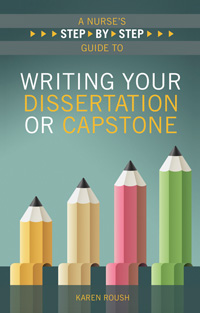
Karen Roush, PhD, APN, assistant professor of nursing at Lehman College in the Bronx, New York, USA, is the author of A Nurse’s Step-by-Step Guide to Writing Your Dissertation or Capstone. Roush served for many years as editorial director and clinical managing editor for the American Journal of Nursing (AJN) and continues her affiliation with the journal as an editorial consultant. The founder of The Scholar’s Voice, established to help professionals and scholars in the health sciences, particularly nurses, become skilled, confident writers, Roush blogs regularly for AJN’s “Off the Charts” and advocates against gender-based violence by writing and speaking on the topic.