Monday, August 3, 2015

Workplace Initiatives That Promote Diversity and Inclusion

Workplace Initiatives That Promote Diversity and Inclusion

As the United States becomes more of a melting pot, encouraging and nurturing a workplace that welcomes the different cultures, ethnicities, and lifestyles of staff are paramount to optimal collaboration, productivity, and success. In health care, where diversity increasingly is exemplified among patients as well as employees, such an embrace is critical to achieving best outcomes.
Health care institutions across the country are heeding the call for inclusion. Many have implemented initiatives to not only attract diverse staff, but also to keep and engage them.
The Mayo Clinic in Rochester, Minnesota, for instance, launched the Multicultural Nurses Mayo Employee Resource Group (MNMERG) in July 2014 to recruit and retain nurses from diverse cultures and offer them professional support and networking opportunities. The MNMERG also mentors and educates Mayo’s diverse nurses and involves them in community programs.
With some 25 members, the MNMERG welcomes all Mayo staff. It meets monthly at the hospital, but this year will add quarterly dinners off site and is evaluating online technologies such as Skype and Sharepoint to “engage a 24/7 workforce,” says MNMERG cochair Deborah A. Delgado, MS, RN-BC, a nursing education specialist in psychiatry.
Mayo Employee Resource Groups (MERGs) have been an important component of Mayo’s overall diversity initiative; the goal is to have the following five core MERGs—African American, LGBTI, Hispanic, Disability, and Veterans—at Mayo’s three major clinical sites. Each MERG has an executive sponsor who is a leader at Mayo, but not a member of the group. For example, the MNMERG’s sponsor is a male cardiologist with experience in developing family/patient advisory groups. All of Mayo’s MERGs have formally chartered to align with at least one of the organization’s strategic diversity goals.
“These range from culturally competent care to inclusion and addressing health disparities,” says Sharonne N. Hayes, MD, FACC, FAHA, director of diversity and inclusion and professor of medicine at the Women’s Heart Clinic at Mayo. She notes that the groups share innovations and hold cross activities. “By that collaboration,” she says, “you get more hands to do the work obviously, but you also get a wonderful side product of some cross-cultural mentoring and some cross-cultural experience.”
While the MNMERG is in its infancy, feedback has been positive. “By being visible, by engaging, and by contributing, it just leads to retainment,” Delgado offers. “People want to stay because they’re able to use all of their gifts and talents to affect the organization’s purpose and goals.”
The Clinical Leadership Collaborative for Diversity in Nursing (CLCDN) at Massachusetts General Hospital in Boston has realized recruitment and retention success with diverse students of nursing. A scholarship and mentoring program established in 2007 by Partners HealthCare (PHC), an integrated system of which Mass General is a member, the CLCDN draws applicants from the nursing program at University of Massachusetts Boston.
Students must demonstrate leadership qualities, have cumulative general and nursing GPAs of 3.0 or higher, and must be entering their junior year of study since the CLCDN will carry them through their senior year. They link with racially and ethnically diverse nurse mentors, attend unit meetings and social and educational events, and observe nurses and nursing leaders in action. Additionally, they receive a stipend and financial support for tuition and fees with the expectation they will pursue employment at a PHC institution after graduating.
“When you’re a minority and you’re going into an environment where you might be the only diverse person on your clinical unit, as an example, it can be really challenging; it can be very lonely,“ says Gaurdia E. Banister, PhD, RN, FAAN, the PHC CLCDN liaison to UMass Boston and executive director of the hospital’s Institute for Patient Care. “We wanted to put mechanisms in place to ensure the success of our students and, certainly once they graduated, the best possible [career] alternatives,” she says.
Mass General diverse nurse leaders who have successfully navigated such waters can “provide these wonderful, wonderful pearls of wisdom and support and encouragement and listening skills,” explains Banister, and they serve as mentors, as do CLCDN graduates. Of the 54 mentors to date (32 from Mass General), some are repeats. Other statistics are just as impressive—such as PHC’s 82.6% hiring rate among the 69 graduates thus far (47.8% of whom have been employed by Mass General) and the almost 80% retention rate for these graduates.
“They love being a nurse. It’s exactly what they anticipated their career to be,” says Banister. “They are constantly promoting how positive it has been for them and that they feel like our organizations are becoming much more of a welcoming and diverse place to work.”
At the Cleveland Clinic, location-specific Diversity Councils at each of the enterprise’s community hospitals and family health centers are effectively supporting and sustaining an inclusive work environment. These employee-led councils implement action plans and sponsor activities based on strategies and goals defined by an Executive Diversity Council, all aimed to enhance employee engagement and cultural competence.
While the Executive Diversity Council works “to set the tone and the agenda,” the location-specific councils “serve as the tactical team,” explains Diana Gueits, director of diversity and inclusion. The main-campus council, for one, formed the Nursing Cultural Competence Committee and the Disability Task Force; the task force, in turn, developed the Disability Etiquette Lunch ’n Learn, a program to assist caregivers in their interaction and communication with disabled individuals that has since been taken enterprise-wide. Gueits notes the councils share and cross-pollinate ideas.
Cleveland Clinic’s chief nursing officer sits on the Executive Diversity Council, and many nurses participate in the location-specific councils with several diverse nurses serving in leadership roles (the councils overall represent a cross-section of the clinic’s workforce). Two cochairs and a cochair-elect lead each council, act as local ambassadors for diversity, engage with executive leadership, and provide feedback to the Office of Diversity and Inclusion, which facilitates the business-like, SMART-goals approach of the councils.
“This is a passion for them,” says Gueits of the cochairs, who are selected based on their experience in leading transformative teams and their commitment to diversity and inclusion. “I think that what the councils provide them is an opportunity to see, to actually be part of an initiative and be part of that process from A to Z.”
Cleveland Clinic has 21 location-specific councils, a number that is sure to increase as the enterprise expands. “That is the intention,” Gueits says, “to make sure that we embed diversity and inclusion in our commitment to all our locations and give an opportunity or platform for all our caregivers to be engaged.”

Julie Jacobs is an award-winning writer with special interest and expertise in health care, wellness, and lifestyle. Visit her at www.wynnecommunications.com.

Julie Jacobs

Tuesday, July 28, 2015

Thought this was interesting.....

When You Can't Turn "Off"

nammi, Nurse, General Practice, 09:33AM Jul 24, 2015

Diane M. Goodman

Nursing is an insidious job. It gets into your blood and your heart, and at some point, it becomes you. You begin to meld into the person with no "off" switch, the one who eats, sleeps, and breathes nursing into everything and everyone around you.
I recently became that person, and I needed a family member to set me straight.
None of us are immune. We could become entwined with our careers after a week on the job or forty years. It could occur after a particularly heart-wrenching loss, or after achieving a longstanding goal or award, but the signs and symptoms are irrefutable: we interrupt our peers at lunch to discuss an interesting case we received, in spite of their sighs of frustration. We resolutely discuss "work" talk at baby showers and bridal events, when everyone else clearly wants to focus on the task at hand. Additionally, we see disease &/or disaster at every corner of life (with a teachable moment attached!).
Once we lose our ability to turn "off", we forget to engage in non-nursing events. Sleep? How silly. Our minds are churning over the events of the previous day, wondering where we could have found an extra five minutes for charting or patient contact. TV and movies? Hah!! We have articles and policies bookmarked that need attention. We'll never get caught up if we sit through several episodes of Shark Tank....
Hopefully, a family member or friend recognizes the ailment and nips it in the bud, as mine did. Sitting at a teaching hospital to review films (as a patient, not a nurse practitioner), I was convinced the wheelchair-bound patient in front of us was speaking to me when she asked for assistance. My husband, ever the logical one, knew she was not in distress and was questioning the group at large. He reminded me to turn my nurse switch "off" for two seconds and put a layman's hat ON, nearly impossible to do. He reminded me I can take the invisible ID tag off and be someone other than a nurse, which it seems I had forgotten how to do. I suffered through it, but he was right. Everyone lived! I had been so quick to bounce off that chair before his arm gently stopped me.
As painful as the experience was for me, I would guess that many readers have lost the "off" switch as well. Am I right?

Thursday, July 23, 2015

PhD or DNP? How to choose

PhD or DNP? How to choose
Which sibling are you?
By Tiffany Montgomery


Before looking into doctoral programs, prospective nursing students should decide which route is right for them. Currently, two major nursing degrees are awarded at the doctoral level—the Doctor of Philosophy in nursing and the Doctor of Nursing Practice. In my discussions with BSN- and MSN-prepared nurses, there seems to be a little confusion about the two doctoral degrees. My advice is, do your research and know which degree you want before deciding what school to apply to. Put another way, looking at various schools of nursing and using this information to decide which degree you wish to pursue is not the proper way to make the decision. This is because the two degrees are vastly different and, depending on what you want to do with it, pursuing the wrong degree will be a complete waste of your time.
 
The PhD is a research-oriented degree. The DNP, on the other hand, is a practice degree, which can be likened to degrees obtained by physicians, dentists, pharmacists and optometrists or ophthalmologists. There are a few major differences between the PhD and the DNP. While everyone may not agree with my explanation, consider the following categorical differences,

 
Prestige
Because of their vast differences, the degrees should not be directly compared but, in general, the PhD is regarded as the more prestigious of the two. Of course, the PhD has been around longer and is more widely recognized. It is also the terminal degree in nursing, meaning that no higher degree is attainable. If you looked at nursing degrees from a step-chart perspective, they would look something like this:
 
The chart may be slightly misleading because, in pursuing nursing degrees, a person doesn’t have to go from one step to the next. For instance, the point of entry for a person seeking a nursing license can be a diploma, an associate degree, a bachelor’s degree or an entry-level master’s degree. Also, a nurse doesn’t have to obtain a master’s degree before pursuing a doctoral degree. Still, the chart is a good indicator of how each nursing degree is viewed with regard to prestige.
 
What type of knowledge?
While both degrees are designed to produce nurses who will contribute to the knowledge base of the profession, one thing is clear—the PhD-educated nurse is expected to create new knowledge. A PhD dissertation cannot be successfully defended without the generation of new knowledge. As nurses who are more focused on practice than research, those in DNP programs may or may not have generated new knowledge upon completing their capstone projects.
 
An easy way to differentiate between the two degrees is to see the PhD nurse as a knowledge-creator and the DNP nurse as a knowledge-applier. Where a PhD program focuses on understanding the philosophical and theoretical foundations of nursing and using these foundations to generate new knowledge, a DNP program focuses on taking knowledge available to the profession and transferring it to practical application.
 
Focus on hands-on-nursing
Obtaining a PhD requires no clinical hours at the bedside or direct patient care. Obtaining a DNP, however, typically does require some type of practice hours to prove a student’s competence in his or her specialty area. If you are studying to become a nurse educator, for instance, you may have to work in an academic or clinical education setting. Or, if you are obtaining your DNP to become a nurse practitioner or clinical nurse specialist, you will spend many hours under the preceptorship of an already licensed advanced practice nurse.
 
PhD students take courses such as philosophy and theory to stimulate abstract thinking about the nursing profession whereas DNP students take courses such as pathophysiology and nursing assessment, knowledge and skills more geared to nursing practice. I have seen PhD nurses work per diem or volunteer in order to maintain their nursing skills, provide community service or supplement their income, but never have I come across a PhD-prepared nurse who works full time providing direct patient care. DNP-prepared nurses, on the other hand, often work in patient-care settings as nurse practitioners, clinical nurse specialists, nurse administrators, nurse educators and nurse researchers. Both PhD and DNP nurses teach in academic settings.
 
Choose wisely
Whichever degree you choose to pursue, make your choice wisely. If you are in a PhD program but want to be a full-time nurse practitioner, you may find yourself miserable. If you are in a DNP program, but want to be a world-renowned neuroscience researcher, you may also be miserable. Although it is OK—and highly encouraged—to compare and contrast the two doctoral degrees in nursing, it is imperative to understand that neither degree is “better” than the other. They are complementary. Both are needed to keep patients safe and to continue advancing the practice of nursing.
 
I like to joke that the PhD is the attractive, older sister and the DNP the sassy, younger sister, but their momma and daddy love them both the same. I need my DNP “siblings” just as much as they need me. We are one big happy family. RNL
 
Tiffany M. Montgomery, MSN, RNC-OB, C-EFM, a women’s health nurse since 2005, initially worked as a labor and delivery nurse before broadening her focus to obstetrics and gynecology. She is now pursuing a PhD in nursing at the University of California, Los Angeles.

Why write? Nurse stories are about life—its messiness and its truths.

Why write?
 
Nurse stories are about life—its messiness and its truths.
By Karen Roush
photo of laptop
Why write?
is a question that often comes up in my work of mentoring nurses in writing. The question doesn’t arise as often with faculty members, who are expected to disseminate research findings and are required to publish to get tenure. Nor does it come up with nurses working in the policy arena, who understand the necessity of writing to create change and promote a health care agenda. But nurses working as clinicians don’t see writing as integral to what they do.
 
While it’s true that you can provide excellent clinical care without ever publishing an article, writing will enrich your practice, enhance your experience, and create more positive outcomes for your patients. If writing isn’t part of your nursing life, I encourage you to start. And if it is, I encourage you to expand your writing, try a different genre, reach a new audience, or consider a new purpose.
 
Karen RoushWrite to improve patient care.
Nurses do amazing work. We conduct research, develop innovative approaches to care, and carry out quality-improvement projects that change outcomes and make a real difference in patients’ lives. We need to share with other nurses and health care professionals what we observe and learn in our work, and writing is the best way to do that. When you solve a problem, discover previously unseen connections, or find a better way to care for patients, writing enables you to disseminate your knowledge beyond the bedside for the benefit of many.
 
For example, take a quality-improvement project you’ve completed on your unit that has resulted in positive outcomes for your patients. Perhaps they are better able to self-manage their diabetes or are more prepared for a complex surgery, resulting in less fear preoperatively and improved pain management postoperatively. Talking to co-workers spreads the information within your unit or to the wider facility. Presenting at a conference shares it with a few hundred or even a thousand attendees. But publishing has the potential to spread the information to thousands of nurses across the country and around the world. And that means your efforts to improve care for a few will benefit an untold number of patients.
 
Write to bear witness.
As nurses, we are present at the most profound events—from the beginning of life to the end of life and everything in between. We are there with the mother who hears her baby’s first cries, and we are there with the mother whose baby is born in awful silence. We are there with the patient who awakens from surgery to hear his or her prognosis, and we are there as that patient figures out what that prognosis means. We are there when patients recently diagnosed with diabetes realize that, yes, they can administer their own insulin—they’re going to be all right, after all.
 
Sharing these stories offers meaning and insight to other nurses and those who experience situations similar to what we write about. These stories ease suffering and provide paths to new perspectives that help people heal. When people recognize themselves in stories, they realize they are not alone, that others have been where they are and have made it through. Through that recognition, they may come to a place where they are able to say: “I will be OK. I will get through this, too.”
 
Write to share your own stories.
When we write about our own experiences, we communicate the unique perspectives of two worlds—the world of the healer and the world of the sufferer. We cannot separate our stories from what we’ve learned and lived as nurses. When our personal stories are embedded in that knowledge, they gain power and have potential to be transformative.
 
I am a survivor of intimate partner violence (IPV) and, as a nurse, have cared for many patients who have experienced IPV. Writing as both a survivor and nurse gives a weight to what I write that neither perspective alone would have. It engenders trust and credibility and, therefore, creates an opportunity and—I believe—a responsibility to share my personal story for the possibility of change.
 
Recently, I visited a class of graduate students to talk about writing. They had been assigned to read some of the pieces I’ve written about IPV over the years, including opinion pieces, blog posts, poems, and research findings. The responses of two students illustrate the impact writing can have.
 
The first confessed that, when she saw the topic of the reading assignments, she was not happy. “I thought, ‘Oh no, this is going to be such a downer.’” But the insights she gained from reading about IPV in those formats—stories, poems, and opinion pieces—made her realize how little understanding she had of the experience of IPV and how her misconceptions had resulted in her providing poor care to women who suffered from it. She was determined to change her practice.
 
The second student was a woman who was in an undergraduate class I had visited a few years earlier, a class that also had read some of my writing on the subject of IPV. Now, in this graduate-level class, she asked if she could read something she had written. It was a personal essay about reading my stories and how it had given her courage to finally speak about her own experiences as a survivor of IPV. Through writing, she was able to break through the silence and isolation and begin to heal. These two examples illustrate the tremendous power of writing to transform lives, professionally and personally.
 
Write to tell the stories of others.
Nurses have a long history of speaking up for the vulnerable and the voiceless, beginning with Florence Nightingale, a prolific writer, and onward to nurses such as Lillian Wald, the great pioneer and champion of public health nursing. Wald published a series of articles in The Atlantic Monthly that later evolved into her book, The House on Henry Street. In the articles and the book, she told stories of the poor and disenfranchised that she and her organization of nurses cared for, a population of new immigrants to the city who were unable to speak for themselves.
 
As Wald writes in The House on Henry Street, “Conditions such as these were allowed because people did not know, and for me there was a challenge to know and to tell” (p. 8, italics original). Writing is the best way to tell—not only because, as noted above, it can potentially reach so many, but because it endures. Speaking about a story or a project resonates in the moment, but writing can resonate through time. A hundred years after she wrote them, Lillian Wald’s words enhance our understanding of social injustice and move us to do something about the injustices we see today.
 
Write to understand.
Writing forces us to see gaps in our thinking. We cannot write well about a topic unless we understand it completely. When we see gaps, two things may happen: 1) We go out and seek more information, which may cause us to question preconceived ideas, change perceptions, and open ourselves to discovery of new ideas, or 2) we begin to formulate questions that will guide research to help fill the information gaps. Eventually, writing leads to new understanding, not only for ourselves but for other nurses and health care professionals.
 
Book coverWriting also helps us make sense of this world of health and illness, trauma and redemption that we inhabit. We are called upon day after day to deal efficiently and logically with suffering, to apply science and rationality to the irrational. Moving quickly through a morass of tubes and wires, we combine numbers and evidence with the subjectivity of the life in front of us. Amongst all the equipment, diagnostics, and data, writing keeps us connected to humanity. It helps us interpret and analyze our actions and reactions. It helps us see some small part of ourselves in our patients and, as a result, to be that much more empathetic and to go back the next day and do it all again. Maybe better.
 
So, why write?
Our experiences as nurses—our stories—are about life, all of its confused messiness as well as its transcendent truths. Few other professions put members in the thick of it like nursing does. When we write about it, we make connections, improve care, and transform lives. Isn’t that the very essence of what nursing is? RNL
 
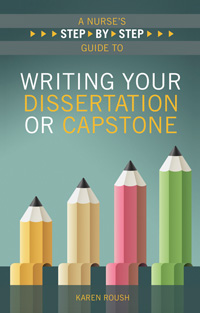
Karen Roush, PhD, APN, assistant professor of nursing at Lehman College in the Bronx, New York, USA, is the author of A Nurse’s Step-by-Step Guide to Writing Your Dissertation or Capstone. Roush served for many years as editorial director and clinical managing editor for the American Journal of Nursing (AJN) and continues her affiliation with the journal as an editorial consultant. The founder of The Scholar’s Voice, established to help professionals and scholars in the health sciences, particularly nurses, become skilled, confident writers, Roush blogs regularly for AJN’s “Off the Charts” and advocates against gender-based violence by writing and speaking on the topic.

Tuesday, July 7, 2015

Personal Safety for Nurses


Data from the Bureau of Labor Statistics (BLS) show that the health care sector continues to be the most dangerous place to work in America. According to the Occupational Safety and Health Administration (OSHA), health care workers are confronted with the following job hazards: bloodborne pathogens and biological hazards; potential chemical and drug exposures; waste anesthetic gas exposures; respiratory hazards; ergonomic hazards from lifting and repetitive tasks; laser hazards; workplace violence; hazards associated with laboratories; and radioactive material and X-ray hazards. In 2010, there were 653,900 workplace injuries and illnesses in the health care sector, which is more than 152,000 more injuries than the manufacturing sector, according to a 2013 Public Citizen report.
The paradigm for promoting nurse safety is changing, but slowly, and has not kept up with the technology to prevent injury, says Amber Hogan Mitchell, DrPH, MPH, CPH, president and executive director of the International Safety Center. “There have been a lot of advances over the last few decades to significantly improve nurses’ safety, but more can be done to collect and analyze data that would help speed adoption of innovative technology and spur swifter action to revise and implement stronger safety-related best practices and policies.”
The issue of nurse safety is pervasive. Unfortunately, musculoskeletal injuries are common from lifting patients without enough assistance. Nurses lift the equivalent of 1.8 tons every eight hours. Unanticipated exposures to blood and body fluids (BBFs) pose infection and illness risks to nurses on a daily basis. In the process of caregiving, patients or family members occasionally strike out at the nursing staff. Assaults from patients and patient visitors are far from being listed as isolated incidents. 
“Health care has reached a critical tipping point,” says Alexandra Robbins, author of the New York Times bestseller The Nurses: A Year of Secrets, Drama, and Miracles with the Heroes of the Hospital. “With looming physician shortages and an increasing demand for services, workplaces will have no choice but to make changes to accommodate nurses, our largest health care provider.”
Clinically Proven Textile Technology
About one in two nurses experience blood exposure, other than from a needle stick, on their skin or in their eyes, nose, or mouth at least once a month, according to a 2012 study by the International Healthcare Worker Safety Center at the University of Virginia. In fact, nurses experience these exposures most often while providing direct care, when they are least expecting it and not wearing protective clothing, according to data from the International Safety Center’s Exposure Prevention Information Network (EPINet).
In order to better protect nurses from unexpected exposures to harmful pathogens, we need to first address the role their daily attire can play in protecting them, says Barbara DeBaun, RN, MSN, CIC, consulting vice president of clinical affairs at Vestagen Technical Textiles, Inc. When exposure is unexpected and nurses are not donning personal protective equipment (PPE), traditional scrubs leave nurses vulnerable to direct contact with harmful contaminants that stay with them all shift long.
“Traditional scrubs allow micro-organisms, blood, and other body fluids to leach through the fabric, resulting in nurses carrying contaminants from patient to patient and home to their families,” DeBaun says. “New ‘active-barrier’ textile technologies, made with fabric such as Vestex, contain fluid-repellent, antimicrobial, and breathability properties.”
Debaun explains that this innovative fabric technology combination is key in helping reduce the acquisition, retention, and transmission of harmful pathogens on health care worker attire. Working together, the fluid-repellent barrier causes harmful contaminants to bead up and roll off the fabric, and the antimicrobial agent limits growth of bacteria on the fabric. Vestex’s active-barrier apparel is currently the only textile technology that has shown clinical effectiveness at reducing MRSA infections by 99.9%, in comparison to traditional attire.
Active-barrier apparel is already available in scrubs and white coats for health care workers and health care facilities to purchase. Hospitals such as Baptist Health in Jacksonville, Florida, have already established a systemwide uniform policy that requires staff to wear active-barrier protective uniforms. The organization made a commitment in 2014 to transition more than 6,000 workers, and all patient attire, to Vestex garments to enhance their culture of safety.
“As more data shows the risk that attire can play in transferring harmful contaminants, we believe that advancements in textile technologies will soon become the new industry standard for nurses in all health care settings,” DeBaun says.
Better Security
Nursing is the third most dangerous profession in the country because the vast majority of nurses are attacked by the people they are trying to help. According to data from the BLS, U.S. health care workers experience the most nonfatal workplace violence compared to other professions by a wide margin, with attacks on them accounting for almost 70% of all nonfatal workplace assaults and causing days away from work.
In 2014, 68-year-old Charles Emmett Logan, a patient at a Minnesota hospital, attacked a group of nurses with a pipe pulled from his hospital bed. The incident, which was caught on video, showed Logan running through the nurse’s station wielding a metal pole, hoisting it over his head, and hitting nearby nurses who attempted to flee the scene. One nurse suffered a collapsed lung, another fractured her wrist, and others had cuts and bruises. Medical staff told police that Logan, who died in police custody, suffered from paranoia.
“Hospitals do not protect their nurses, and it’s time they do,” says Robbins. “There is so much more that can be done, both tangible changes and major shifts in attitudes.”
Some hospitals believe that posting security personnel near triage looks negative, so they don’t put enough security staff at the entry points to the hospital and near triage. This puts the triage staff at risk when patients who are high, drunk, or psychotic come in the door, explains Robbins.
After the episode in Minnesota, the hospital initiated a training program to teach workers how to recognize and de-escalate potentially violent situations. However, many hospitals lack this basic safety measure — an oversight that leaves caregivers vulnerable.
“Understandably, nurses are focused on providing the highest quality and safest care to their patients, and often at the unintended risk of not protecting themselves,” Mitchell says. “A shift towards promoting a culture of safety that encompasses both patient and worker safety and security can create an overall better, more effective health care environment.”
To help promote a culture of safety, Robbins recommends that hospitals take the following steps:
• Install metal detectors to reduce the chances of patients or visitors injuring nurses and other staff members with weapons.
• Keep a computer database that flags patients known to be belligerent or aggressive.
• Install bulletproof glass and beef up security.
• Practice safe staffing and hire enough nurses so that the nurse–patient ratios are safe.
“The secret to improving American health care is to hire more nurses and insist that workplaces do a better job of protecting our frontline responders,” Robbins adds.
New Policies and Procedures
Exposures to BBFs pose a very large safety risk to nurses. According to data from EPINet, 47.7% of nurses were exposed to BBFs while on the job in 2012. Perhaps even more alarming, from 2003 to 2012, 83.9% had BBFs touch unprotected skin. These rates are high because nurses aren’t protected from unanticipated exposures, and compliance with PPE is surprisingly low. There is mounting evidence as well that nurses’ attire is contaminated with pathogens and can thus become a vector of transmission to other nurses as well as the patients they treat.
Mitchell believes that hospitals need to have programs in place that not only promote the use of PPE, but also measure compliance. This type of surveillance can allow the facility to identify where risks are high and compliance is low, and target programs in those areas, thus reducing exposures and reducing risk.
“EPINet is free to use and is an example of a surveillance system that can help hospitals to reduce risks,” Mitchell says. “The National Institute for Occupational Safety and Health [NIOSH] is launching a national system called the Occupational Health Safety Network [OHSN], and it is compatible with EPINet. Using systems like these allow facilities to compare themselves to others like them and to constantly improve.”
It is important to remember that safety is guided by a hierarchy of controls, which means that it is important first to eliminate hazards and risks to the lowest possible extent. Mitchell says this is done using engineering controls such as safety-engineered devices that eliminate or protect needles (e.g., needleless IV systems, retracting or shielded needles used on syringes, and blunt suture needles). For exposures to BBFs that splash and splatter, engineering controls might include closed systems for suction canisters or spill-resistant specimen containers. It may even include the use of new innovations in textiles, including those that are fluid-repellent and antimicrobial so that BBFs run right off of them, and fluids don’t soak in to the skin.
There will always be more that can be done to address nursing safety risks, Mitchell believes. Organizations like OSHA, NIOSH, and the Association of PeriOperative Registered Nurses, are always open to feedback, and it is only in providing them with your experiences and opinions that they can provide better guidance.
Mitchell adds that addressing nursing safety risks means creating the safest possible working environments and identifying and measuring hazards, so that programs and interventions can be designed to target and prevent them.
“This involves frontline nurses contributing to the review, evaluation, and selection of engineering controls, medical devices, and even textiles used in their hospitals,” Mitchell says. “Finally, it means working together across specialties, across units, across facilities, and across disciplines to share ideas, foster collaboration, and learn from each other.”

Terah Shelton Harris is a freelance writer based in Alabama.

Tuesday, June 23, 2015

Recharge Your Energy With Less Stress

Recharge Your Energy With Less Stress

Nurses know stress.
In a job that is often 24/7 and requires the most technical and most empathetic skills to be used simultaneously and at a moment’s notice and often in less-than-ideal and sometimes dangerous conditions, a nurse’s job is hardly peaceful.
But Amiee Bernstein, author of Stress Less. Achieve More. and president of Open Mind Adventures, says you can use that ramped-up adrenaline to actually get more done. If you can stop fighting against the constant demands, you can actually get into a healthier zone where you can be more productive and more centered.
There’s a difference between stress and pressure, says Bernstein, and understanding how each impacts your typical day is important. “Webster defines pressure as a force or a power or energy that comes in contact with a surface, fluid, or object,” she says. “I use pressure as energy. Pressure is our energy, our life force, and the energy of change.”

Pressure vs. Stress
But stress is something entirely different and most of us want less stress. “Pressure is good,” she says. “Stress is not good. When you are open to pressure, your capacity increases and your perception is enhanced.” Stress is the opposite – it depletes your energy.
As an example, Bernstein says no matter how tired you are, when there’s an emergency at work, your body provides that rush of energy to help you do your job. “As a nurse, if you are open to it, you will perform very well,” she says. “If you resist it, you will feel discomfort and distress.”
You can use these tips for deciding what’s pressure in your life and what causes you stress and how you can choose to change how you react.

Awareness
Bernstein says is helps to become aware of your own stress triggers. A coworker might thrive under a huge list of expectations, while that same task list makes you feel resentful. No one is right or wrong about a trigger, but it helps to know what makes your stress rise. If you know your triggers, says Bernstein, you then have the power to choose how you will let it affect you.

Presence
Bernstein refers to this as “hereness,” which is how you assess before you react. Workers in stressful roles – nurses, physicians, military personnel – act from their bodies in an emergency. Being present means you listen to your intuition first, often before you have time to think through a scenario. You react based on experience. But your intuition isn’t just guessing. “You have to practice it,” says Bernstein, so you can determine if your attention is focused within yourself (only on what you are feeling), out of yourself (only on what others are feeling), or a balance of both (when you can attend to others’ needs while recognizing your own).
Wherever your attention is, that’s your center,” says Bernstein. Once you are aware and present, controlling the stress and opening to pressure so you can function at your best means noticing when there’s an imbalance so you can find your center.

You don’t have to be tension free to function at your best, she says, but you do have to work so that the tension doesn’t overtake your energy. How can you tell is you need less stress? Is your back tight? Are your shoulders hunching? Is your stomach in knots? If that’s happening, taking deep breaths (Bernstein even recommends holding your breath for just a bit to break out of the cycle) and realizing the source of stress and how it’s beginning to impact you is necessary. “That’s your yellow light flashing,” Bernstein says.

No one can have a life free of stress and pressure, but you can learn how to manage them. “When you are working without pressure, there’s no motivation or drive,” says Bernstein. “That’s when you fall into complacency.”
Instead, notice when you react negatively and respond in ways that make you feel better. You can’t strike a yoga pose in the middle of the ER, but you can notice how you feel and train your body to react differently and your experience, although pressured, will be less stressful. You can even talk about individual triggers as a team so there’s more awareness at work of what might affect the team.
You will turn pressure into a positive force in your life,” says Bernstein.

Julia Quinn-Szcesuil

Thursday, June 11, 2015

Molly’s perspective: How I applied No. 4 of Cindy’s ‘Five RITES’ Part Three

Molly’s perspective: How I applied No. 4 of Cindy’s ‘Five RITES’
Or, What I learned in my first job after nursing school. Part Three of three-part series.
By Molly Clark

During my years as a nursing student, civility was not formally addressed in our classroom or clinical settings. It was implied that we were to treat professors and fellow students with respect, but we were not taught skills to deal with matters of incivility. It is important that nursing students and recent graduates recognize incivility and learn skills to deal with these issues because, although it can be very challenging to confront professors, co-workers, and managers about such matters, it is crucial to successful practice of our profession.
Although our professors did not teach us about civility, I talked with my mom [Cindy Clark, creator of Clark’s Five RITES of Civility] about the importance of civility and why it matters. And as I matured as a nursing student and began my career as a young nurse, I felt equipped to recognize incivility and address the problems I encountered.
I had proven I could talk to my manager about important matters without succumbing to intimidation or fear.
After graduating from nursing school, I started my first job as a psychiatric nurse, working with troubled adolescents. After three weeks of general orientation, I was on my own and, within four weeks, had become a charge nurse on the unit. For a new graduate, this was a lot of pressure. At times, I was left in charge of 24 teens, while supervising five staff members. This was stressful enough, but we were working with some adolescents who were violent and seriously mentally ill. The unit could change from complete calm to mass chaos in a minute, and it was my job to prevent that from happening.
I remember very vividly the first day I cried on the job. The morning started out quietly but, just before lunch, the calm was shattered with screams, shouts, and threats. What had been a relatively quiet setting suddenly crumbled around me and, to my surprise, I found that it was prompted by my manager’s actions. For some unknown reason, he purposely antagonized some of the patients, then walked off the unit and left me to deal with the aftermath.
In that moment, five seasoned staff members looked at me, expecting me to handle the volatile situation. I had to make some very difficult decisions that day, not black-and-white decisions but ones that required me to use all the critical thinking skills I had developed in nursing school and, up to that point, on the job. Throughout the entire episode, I was running on pure adrenaline, and it wasn’t until I was reporting to the next shift that I broke down. Yes, I was upset about what had happened, but mostly I was very frustrated.

After leaving work that day, I called my mom to talk about what had happened. I realized that most of my frustration boiled down to my manager’s involvement in the situation, topped off by my lack of training and experience in making difficult decisions. Mom and I discussed ways to address this particular situation to prevent it from happening in the future—not only for myself but also for other new graduates and, especially, for the patients.

Rite No. 4: Engage and commit to personal and organizational change
The next day, I asked my manager if I could talk with him about what happened the day before. I was very nervous going into the meeting, because I did not know how he was going to react to what I had to say. During our meeting, I talked about his involvement in the situation and how I felt as though he had walked off the unit at the very time we needed his help. Surprisingly, he completely accepted responsibility, and we discussed what he could have done differently. We spoke candidly and talked about how we would handle future situations. I expressed concern about my inexperience as a charge nurse and shared how my lack of training hampered my ability to make immediate decisions amidst a crisis situation.

I left that meeting feeling a lot better about myself and better prepared to deal with similar situations that may occur in the future. I had proven I could talk to my manager about important matters without succumbing to intimidation or fear. From that point on, I talked to my manager about ways to improve my work, and it made my transition much smoother. I was able to voice my concerns and stand up for myself and other new nurses.
Shortly after my meeting with my manager, the hospital implemented a “new-graduate meeting” every other week in which we are encouraged to discuss concerns, fears, and issues we are facing. I soon realized that several other new grads had the same concerns I did, and we now had a voice to make changes.

Looking back, if I had not talked with my manager about my concerns, my first work experience would have been very different. Instead, I was able to address the problem early and not let it fester. Yes, it takes courage to meet with a manager and express your true feelings, but it’s worth it. That’s why it’s important for nursing students to learn how to handle acts of incivility during their academic education and to learn skills needed to address issues they will face during their nursing education and throughout their career as nurses.
Students and new graduates are nursing’s future. If we can teach them about civility and how to advocate for change, the nursing profession will be in excellent hands. RNL
Part Two: Cindy’s ‘Five RITES’ for fostering student-driven civility (article by Molly Clark's mom)
For another article by Cindy Clark on civility and nursing students, see What students can do to promote civility.  
Molly Clark, BSN, RN, a 2011 graduate of Carroll College School of Nursing in Helena, Montana, USA—she played soccer for the Fighting Saints!—was recently commissioned as an ensign in the U.S. Navy Nurse Corps. After completing Officer Development School in March, Clark will be stationed at the Naval Medical Center in Portsmouth, Virginia.